News

CHRT launches new projects advancing health policy and data integration

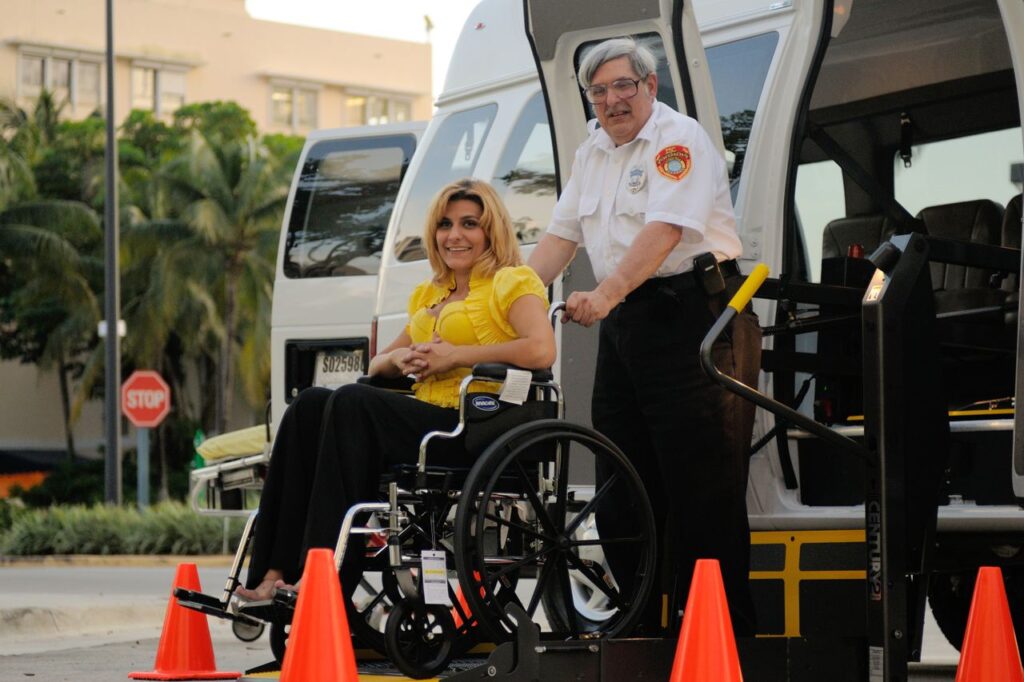
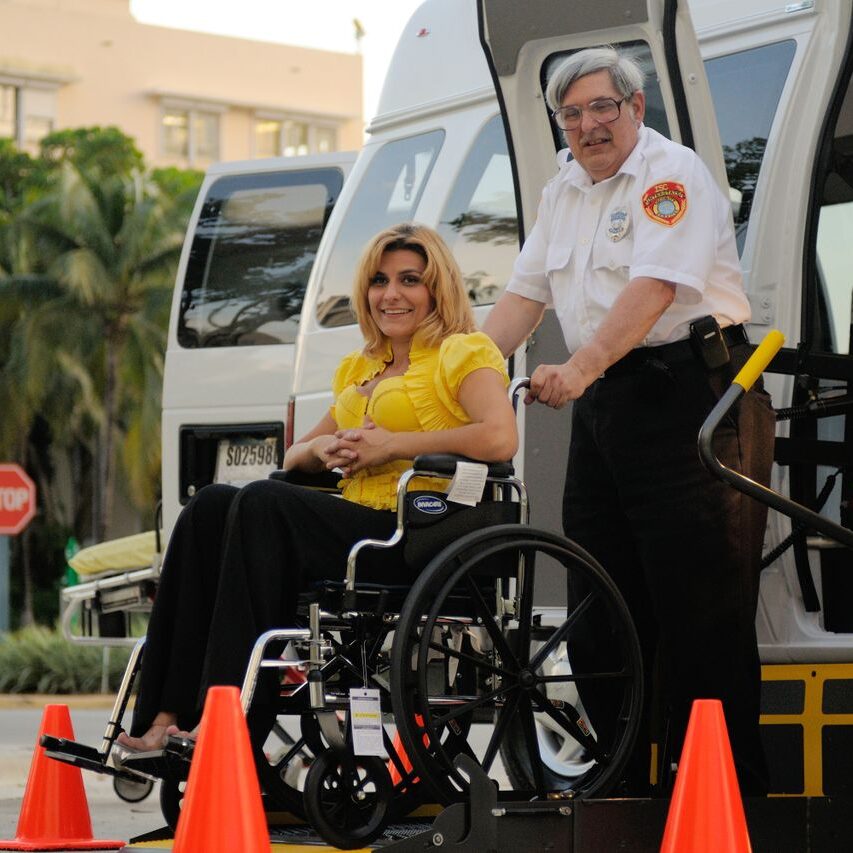
Man pushes woman in a wheelchair.

The Center for Health and Research Transformation (CHRT) is launching two new projects focused on transportation data and Medicaid policy. CHRT is also renewing its work to provide health policy education for Michigan legislators and legislative staff.

Advancing health equity through transportation data infrastructure

CHRT is partnering with Feonix Mobility Rising to strengthen the organization’s capacity for real-time health equity reporting through improved transportation data infrastructure. CHRT will help integrate Salesforce and Tableau systems, refine intake and ride-tracking data, and develop an interactive dashboard to support communication with funders, Medicaid agencies, and community stakeholders.

Developing Medicaid issue briefs for Michigan policymakers

With support from the Michigan Health Endowment Fund, CHRT is working with University of Michigan researchers to develop a series of issue briefs focused on current health policy topics in Michigan. The briefs will provide clear, timely analysis to help policymakers, nonprofit organizations, healthcare providers, businesses, and the public understand policy changes and how their impacts may differ across the state.

Renewing health policy education for Michigan legislators

With renewed support from the Michigan Health Endowment Fund, CHRT will continue providing health policy education for Michigan legislators and legislative staff. CHRT will develop issue briefs on healthcare affordability and rural health and help plan an in-person educational session for legislators following the election.

The NUS-Lancet PRIME Commission: CHRT team contributes to research on equity in pandemic readiness

A mask and needles
A mask and needles

The NUS-Lancet PRIME Commission brings together evidence from 20 countries to outline how government, institutions, and communities can move from formal plans to peole-centered protection for future health crises.

The Center for Health and Research Transformation (CHRT) served as the United States lead for the commission, contributing data and expertise. We’re proud to see this work now published.

PRIME turns the often-invoked whole-of-society idea into a structured framework for action across sectors and levels of governance. Applying PRIME’s recommendations has the potential not only to save lives, but also to strengthen institutions and community trust for future health emergencies and other 21st-century crises.

Read more in the complete article.

Michigan Health Endowment Fund: Building on their partnership with the CHRT Health Policy Fellowship

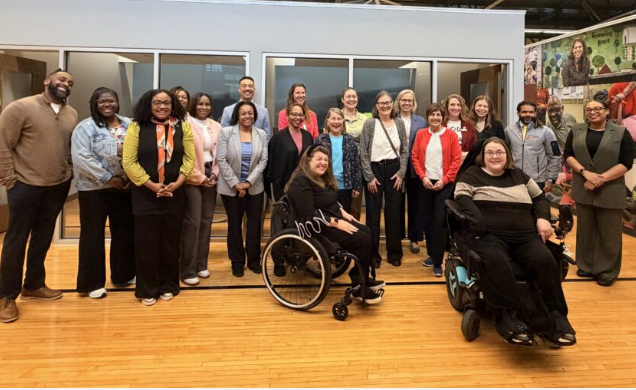
The Detroit Community-Academic Urban Research Center cohort

For several years, the Michigan Health Endowment Fund has supported nonprofit leaders to participate in CHRT’s Health Policy Fellowship. This support expands health policy capacity in the individuals it sponsers, strenghtening their ability to engage in policy discussions and advance evidence-based solutions that can make a different for their communities.

The Fund has also invested in efforts that support nonprofits at the organizational level, which they share in a new news feature that highlights the Health Policy Fellowship alongside the Fund’s partnership with the Detroit Community-Academic Urban Research Center over the last year.

CHRT is proud to be discussed alongside this important intiative. To learn more, read the whole story.

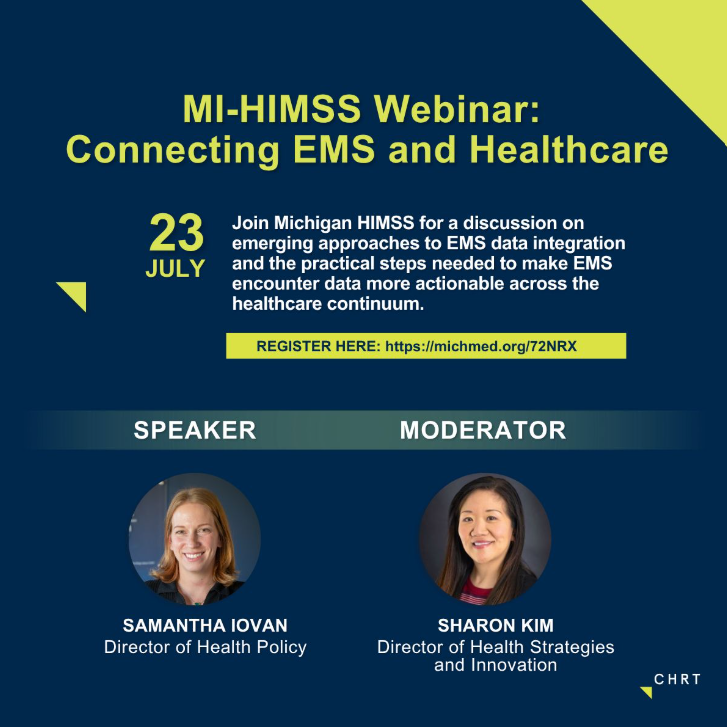
CHRT’s Samantha Iovan and Sharon Kim speak at the MI-HIMSS Webinar “Connecting EMS and Healthcare”

MI-HIMSS Webinar: Connecting EMS and Healthcare

On July 23, 2026, the Michigan chapter of the Healthcare Information and Management Systems Society (MI-HIMSS) hosted a webinar about Connecting EMS and Healthcare. CHRT was proud to see our director of health policy, Samantha Iovan, as a speaker and our director of health strategies and innovations, Sharon Kim, as the moderator.

The webinar discussed emerging approaches to EMS data integration and the practical steps needed to make EMS encounter data more actionable across the healthcare continuum.

Presenters from CHRT, AHTS, and MDHHS shared Michigan’s value proposition and priorities for EMS data integration, discussed the foundational work to route ADT notifications to EMS providers, and described the work to convert EMS encounter data into ADT messages for transmission through the statewide ecosystem.

The session highlighted CHRT’s Specially Protected Information (SPI) flagging framework, designed to help identify and appropriately handle and route potentially sensitive EMS data before it is shared.

Watch the full webinar recording below or on YouTube.

Introducing CHRT’s 2026 Summer Interns: Montala Carruthers, Taylen Hemingway, and Sarah Peterson

CHRT is pleased to welcome three talented students to our team this summer: Montala Carruthers, Taylen Hemingway, and Sarah Peterson. Through their academic studies, professional experiences, and commitment to improving health and well-being, each brings valuable perspectives to CHRT’s work. We look forward to learning from them and supporting their professional development over the coming months.

Montala Carruthers

Montala Carruthers is pursuing a Master of Public Health in Population and Health Sciences at the University of Michigan. A first-generation college graduate and new mother, Montala brings experience in behavioral health, public health outreach, and community-based care. Her work supporting individuals experiencing homelessness, administering COVID-19 vaccinations, and advancing health initiatives in both local and international settings has strengthened her commitment to creating equitable, trauma-informed systems that help individuals and families thrive.

Taylen Hemingway

Taylen Hemingway is a junior at the University of Michigan majoring in Sociology and pursuing the university’s MSW 4+1 pathway, along with a minor in Intergroup Relations. With a strong background in digital media and wellness communication, Taylen is passionate about making information and resources more accessible to diverse communities. She is interested in the role communication can play in improving well-being and connecting people with the support they need.

Sarah Peterson

Sarah Peterson is pursuing a dual degree at the University of Michigan’s Ford School of Public Policy and Ross School of Business, where she is working toward a Master of Public Policy and Master of Business Administration. Before graduate school, Sarah worked as a healthcare administrator at a public district hospital in Washington state. Her interests include health and social policy, health system design, payment reform, and the role local and state governments play in improving community health and access to services.

Sarah is CHRT’s 2026 Rebecca Copeland intern. The Rebecca Copeland Internship was established in memory of Rebecca Copeland, a beloved CHRT colleague whose dedication, curiosity, and commitment to improving health and health care left a lasting impact on our organization. The internship provides opportunities for students interested in health policy and health services research to gain hands-on experience while contributing to projects that improve health and well-being. Learn more about the Rebecca Copeland Internship program.

CHRT’s 2025 Health Policy Fellowship wraps up another year of learning and connection

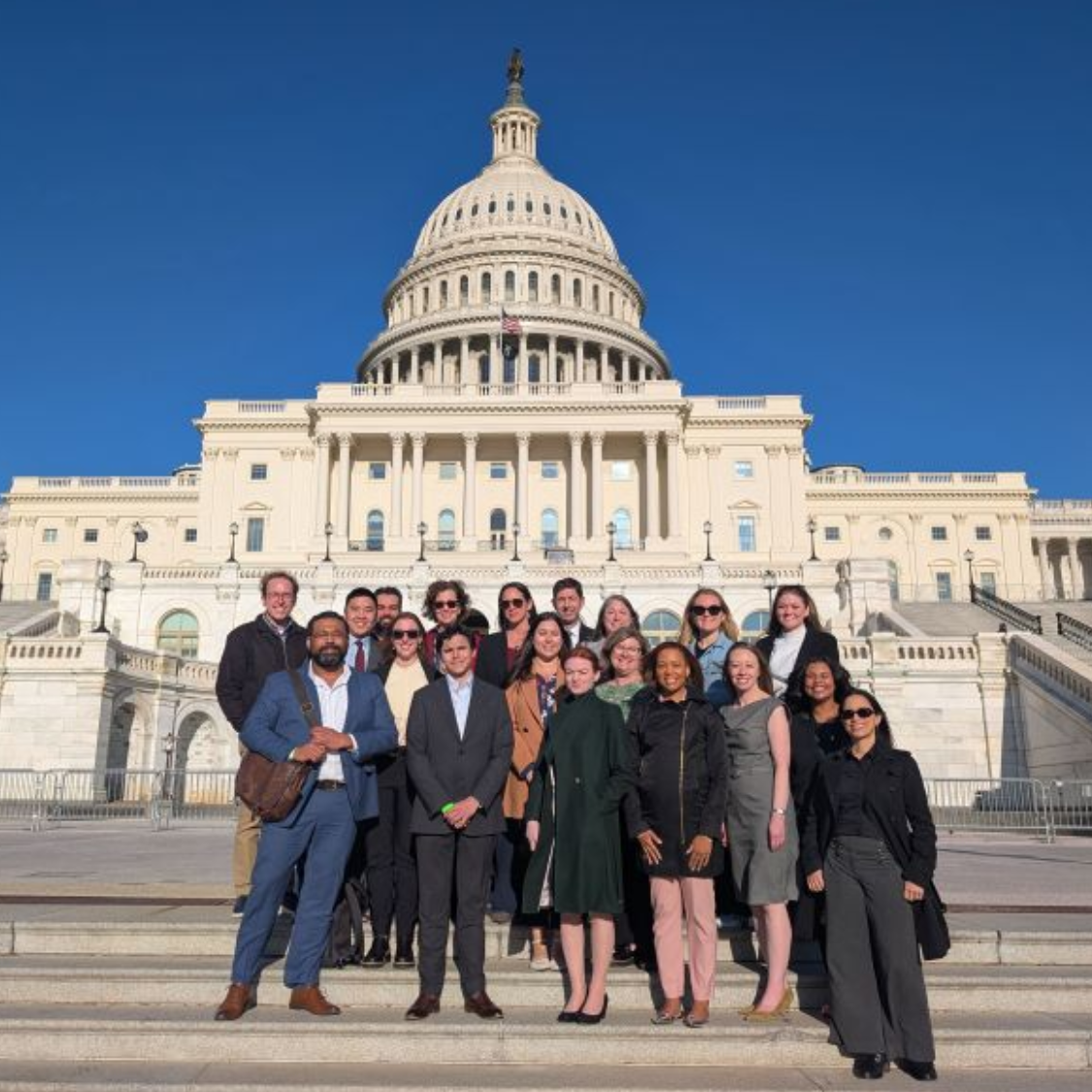
Fellow's in Washington DC

CHRT’s 2025 Health Policy Fellowship recently wrapped up, concluding several months of learning for this year’s cohort of fellows. The fellowship brings together emerging leaders from research, policy, nonprofit, academic, and health care spaces to deepen their understanding of how health policy works at the local, state, and federal levels.

Throughout the program, fellows had the opportunity to hear directly from policymakers, researchers, journalists, advocates, and community leaders who shared their expertise and experiences shaping health policy in Michigan and beyond.

Last month, fellows traveled to Washington, DC to learn more about how health policy works at the federal level. During the visit, they met with policymakers, media experts, and health policy leaders who offered an on-the-ground perspective on how research, policy, and communications intersect in today’s health landscape.

CHRT thanks the many speakers and experts who shared their time and knowledge during the Washington, DC visit, including:

  • Simeon Niles
  • Shawn Gremminger
  • Neil Canfield
  • Eileen Kostanecki
  • Elizabeth Trombley
  • Emma Casey
  • Gabrielle Minarik
  • Michael Spero
  • Meg Rorke
  • Julie Rovner
  • Alice Miranda Ollstein
  • Lizzy Lawrence
  • Neda Jasemi
  • Kate Massey
  • Jake Quinton, MD, MS, MPH

Another key part of the fellowship each year is Detroit Day, where fellows learn directly from community leaders and organizations working to address health and social challenges on the ground.

Detroit Day began with a bus tour led by Reverend Simmons, who shared insights into the challenges faced by Detroit communities while also highlighting the progress that advocacy and community-led efforts have made across the city.

Fellows also heard from leaders working across food insecurity, poverty, maternal and child health, and community care. Eric Candela discussed the impact of food insecurity in Michigan, noting that one in seven Michiganders experience food insecurity and that a significant amount of food grown is never consumed. Luke Shaefer shared how programs such as Rx Kids in Flint have demonstrated meaningful benefits for families while also reducing long-term costs.

Doug Stewart and Shelly Visek spoke with fellows about the challenges faced by Detroit families and how the MiSide program supports residents through early childhood education resources. Fellows also heard from LaShanda, a MiSide participant, who shared how the program helped support her as a young mother of twins.

During lunch at Sweet Potato Sensations, owner Epsy Thomas shared how a family recipe became the foundation for a successful business and decades of community impact in Detroit.

The day concluded with a visit to the Community Health and Social Services Center (CHASS), a federally qualified health center serving Southwest Detroit with affordable and bilingual health and social services.

CHRT is grateful to all of the speakers, organizations, and community leaders who contributed to this year’s fellowship experience. Their willingness to share their work, stories, and perspectives continues to make the fellowship a meaningful and transformative opportunity for Michigan’s emerging health policy leaders.

Announcing the 2026 Health Policy Fellowship cohort  

Instructor speaking to a class of fellowship students
meeting of fellows

We are proud to introduce the 2026 cohort of the Health Policy Fellowship.

Since the program began in 2012, the fellowship has supported the professional development of health researchers, government staff, and nonprofit leaders committed to improving health policy in Michigan. Fellowship graduates continue to contribute to policy development, research, and community programs throughout the state.

The 2026 fellowship cohort will include:

  • Matthew Boak, Policy Advisor, Michigan Senate Majority Policy Office
  • Lisa Braddix, Chief Health Equity Officer, Southeastern Michigan Health Association (SEMHA)
  • Dr. Antionette (Toni) Coe, Assistant Professor, Department of Clinical Pharmacy, University of Michigan
  • Matthew Criado-Cano, Legislative Director, Office of Representative Luke Meerman, Michigan House of Representatives
  • Erin Dickenson, Chief of Staff, Office of Senator Sylvia Santana
  • Jessica Edel, Program Director, Michigan Coalition to End Domestic and Sexual Violence (MCEDSV)
  • Steven Gilbert, Chief of Staff, Office of State Senator Roger Victory
  • O’Nealya Gronstal, Executive Director, Lakeshore Food Club
  • Megan Murphy, Chief Executive Officer, Superior Health Foundation
  • Dr. Bryant Oliphant, Research Assistant Professor, University of Michigan, and Associate Professor, Wayne State University Department of Orthopaedic Surgery
  • Suzanne Owen, Senior Health and Equity Policy Advisor, Office of Governor Gretchen Whitmer
  • Dr. Michelle Padley, Assistant Professor of Emergency Medicine, Michigan State University
  • Isabella Pagogna, Produce Prescription Director, Michigan Farmers Market Association
  • Nadia Syed, Community Benefit Collaborative Program Manager, Michigan Health and Hospital Association
  • Theresa Uhrich, Chief Operating Officer, Region IV Area Agency on Aging
  • Dr. Varun Vohra, Senior Academic Director, Board-Certified Clinical Toxicologist Consultant, and Associate Professor (Clinical), Michigan Poison & Drug Information Center and Wayne State University Department of Emergency Medicine
  • Ta’Sheena Williams, Policy Director, Michigan Council for Maternal and Child Health (MCMCH)

The program is an immersive four-month experience designed to bring together a diverse group of professionals to strengthen collaboration between policymakers, researchers, and nonprofit leaders working to improve health outcomes across Michigan.

Participants will take part in a series of learning sessions and collaborative discussions designed to strengthen their understanding of health policy and leadership. The program provides opportunities for fellows to connect with peers across sectors and gain practical insights they can apply in their work.

For further information about the CHRT Health Policy Fellowship and to apply for the 2027  cohort, please contact Holly Quivera Teague, Fellowship Program Manager, at [email protected].

###

CHRT thanks its fellowship partners and sponsors for their continued support in helping develop the next generation of health policy leaders.

CHRT launches four new projects advancing health systems, aging services, and pandemic preparedness

Senior man walking with a walker outside

The Center for Health and Research Transformation (CHRT) has launched four new projects focused on strengthening health and social care systems in Michigan and beyond. The initiatives span topics from accountable care and aging to community care hubs and pandemic readiness.

Exploring community care hub structures with the Partnership to Align Social Care

CHRT is partnering with the Partnership to Align Social Care (P2ASC) to co-author an issue brief on organizational and corporate structure options for community care hubs. The brief will help hubs identify sustainable models that align with their missions and partnerships.

Supporting strategic planning for the Physician Organization of Michigan ACO

CHRT is providing analytic and policy support to the Physician Organization of Michigan Accountable Care Organization (POM ACO). The team will review and summarize 2026 Medicare Physician Fee Schedule rule changes, assess potential impacts on ACO performance, and support strategic planning and comment-letter development to promote long-term sustainability.

Conducting the United States case study for the NUS-Lancet PRIME Commission

As part of the NUS-Lancet Pandemic Readiness, Implementation, Monitoring, and Evaluation (PRIME) Commission, CHRT is leading the U.S. country case study on pandemic preparedness and response. The project includes literature review, stakeholder mapping, and interviews with national leaders and community representatives to identify lessons from COVID-19 and strengthen future public health systems.

Assessing the needs of Michigan’s aging population

In partnership with the Michigan Department of Health and Human Services (MDHHS), CHRT is supporting the development of a statewide aging needs assessment to inform Michigan’s next State Plan on Aging. The assessment will gather insights from older adults, caregivers, and providers to help shape programs that promote health and independence across the state.

Interview with John Rodriguez, CHRT’s new communications manager

John Rodriguez
John Rodriguez

We at CHRT are excited to welcome John Rodriguez as our new communications manager.

John is a strategic communications professional with more than a decade of experience at the University of Michigan. As communications manager at CHRT, he will lead communications efforts that translate research into accessible stories, elevate community voices, and support evidence-based policy change. 

John’s career has been rooted in a deep commitment to social justice and the belief that communications is a powerful tool for advancing healthy communities. He has worked across higher education and the nonprofit sector helping mission-driven organizations clarify their message, expand their reach, and build authentic connections with diverse audiences. John holds a Political Science degree from UCLA.

We asked John a few questions to get to know him better and learn more about what he hopes to achieve at CHRT.

What drew you to CHRT?

I was excited to join a team that at its core cared deeply about improving the outlook of members in the community, particularly those who are often overlooked and under-resourced. As someone who has spent over a decade using strategic communications to support social justice and public good, I felt a strong alignment with CHRT’s values. I was excited by the opportunity to use my skills to help amplify the impact of evidence-based research and community-rooted programs.

What do you see as the role of the communications team?

The communications team plays a key role in elevating CHRT’s work, translating complex research into accessible narratives, and showcasing the organization’s leadership in health policy and systems change. I see our role as building visibility, trust, and engagement, across policymakers, funders, partners, and community members through a thoughtful and strategic communications approach.

What improvements do you hope to lead at CHRT?

I’m in the process of listening and learning, gathering insights from team members, partners, and existing materials to understand CHRT’s unique strengths and opportunities. Over time, I hope to help refine CHRT’s messaging, strengthen our digital presence, and develop a more cohesive strategy that increases visibility, deepens engagement with our audiences, and affirms our position as a trusted, go-to source.

What do you like to do in your free time?

In my free time, I immerse myself in creative arts, particularly photography, illustration, and painting. I’m drawn to portraiture and enjoy capturing the personality and spirit of the people I photograph or paint. Some samples of my work can be found on  Instagram (@bruinprophet) or on my small online portfolio (https://johnrod.myportfolio.com/). I also enjoy spending time with my kids and taking them to the movies and catching up on the latest super-hero flick.  

Introducing CHRT’s 2025 summer interns: Samikshya Satpathy and Rebecca Copeland Intern Aashritha Murali

2025 CHRT Summer Interns

CHRT is delighted to welcome its 2025 summer interns, Samikshya Satpathy and Rebecca Copeland Intern Aashritha Murali. These two emerging leaders will spend the next few months helping CHRT drive forward user‑centered innovation and health‑equity policy.

Samikshya Satpathy - CHRT 2025 Summer Interns

Samikshya Satpathy is a master’s student at the University of Michigan School of Information, specializing in user‑experience research and design. Before graduate school, she spent more than three years as a product designer at Nykaa and Times Internet, leading projects in fitness, education, dining, and e‑commerce. At CHRT, Samikshya will use her skills in inclusive design and accessibility to improve digital tools that help Detroit residents prepare for new careers through the U‑M Center for Innovation. She is passionate about research‑driven design that balances function, delight, and equity, and she mentors other designers who share these goals.

Aashritha Murali

Aashritha Murali joins us as this year’s Rebecca Copeland Memorial Intern. A master’s student in public health at the University of Michigan, she focuses on health management and policy and will graduate in 2026. Aashritha recently served as a service fellow with the American India Foundation, where she supported gender‑equity programs and gained experience in training, monitoring, and evaluation. She has also worked with the State Planning Commission of Tamil Nadu, studying district‑level gaps in health‑care delivery. At CHRT, Aashritha will concentrate on maternal and child health and on ways to expand care for uninsured populations.

About the Rebecca Copeland Memorial Internship

The internship honors Rebecca Copeland, a dual‑degree graduate in public health and public policy who brought energy, excellence, and a deep commitment to social justice to her work at CHRT. To learn more about her legacy and the first year of the program, read our earlier story, First Rebecca Copeland Memorial Internship.

CHRT looks forward to the fresh perspectives and valuable skills these CHRT 2025 Summer Interns will contribute as they learn, collaborate, and help advance health equity across Michigan and beyond.