
Health Insurance in Michigan, 2008 – 2024
Introduction
Over the past 16 years, Michigan’s health insurance environment has undergone a significant transformation driven by major policy shifts and demographic changes. This report examines the period from 2008 to 2024, highlighting the impact of the Affordable Care Act (ACA), the launch of the Healthy Michigan Plan, and the response to the COVID-19 pandemic. By analyzing data from the American Community Survey, this research provides a baseline for policymakers and the public to understand how Michiganders access care and where coverage gaps have been successfully narrowed.
Key Takeaways
-
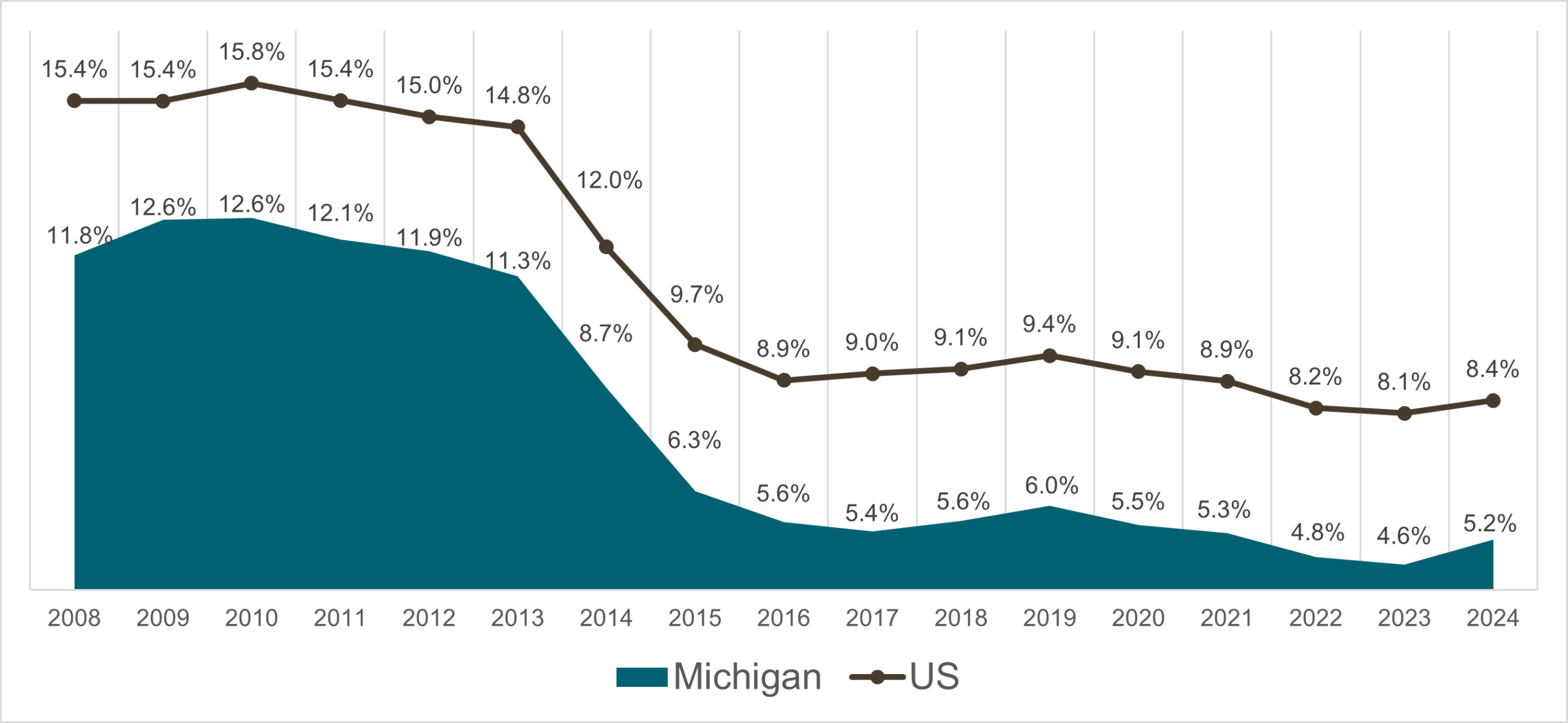
- Significant Reduction in the Uninsured: Michigan’s uninsured rate dropped by more than 50% during this period, falling from 11.8% in 2008 to 5.2% in 2024.
- Substantial Growth in Public Insurance: By 2024, nearly 40% of Michiganders were covered by public programs, a significant increase from just over 25% in 2008.
Medicaid: Participation rose from 11.6% to 16.3%.
Medicare: There was a notable increase in Medicare from 14.5% to 21.4% as the state’s population aged.
-
- Stability in Private Coverage for Working-Age Adults: While overall employer-sponsored insurance (ESI) declined from 57.3% to 52.1% , this was largely due to the aging population transitioning to Medicare. Among working-age adults (ages 19-64), ESI remained remarkably stable, shifting only slightly from 66.0% in 2008 to 65.4% in 2024.
- Narrowing of Disparities: Coverage gains were most pronounced among those previously most likely to be uninsured.
Young Adults: The uninsured rate for 19-to-25-year-olds plummeted from 27.7% in 2008 to 9.4% in 2024.
Income & Race: The uninsured rate for those living below the Federal Poverty Level fell from nearly 25% to 7.7%.
- Broad Based Geographic Gains: Improvements were similar across both urban and rural regions. By 2024, the uninsured rate was 4.8% in urban counties and 6.6% in rural counties.
Summary
The state of Michigan has achieved substantial progress in expanding health insurance access since 2008, reaching a historic low for the uninsured population. This success is attributed to a combination of federal and state policy interventions and stable employer-based coverage for the workforce. However, the landscape continues to evolve; with the expiration of enhanced tax credits in 2025 and new legislative changes under the One Big Beautiful Bill Act, policymakers must remain informed of these trends to ensure continued stability and access for all residents.