News

Michigan Medicaid losses: why community-based organizations are essential to keeping 355,000 residents covered

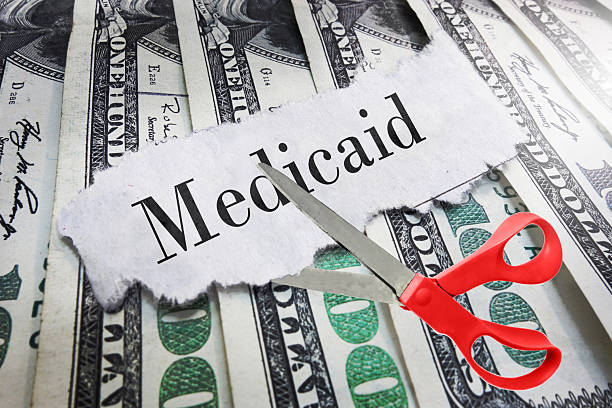
medicaid losses

Lisa Braddix, chief health equity officer for the Southeastern Michigan Health Association, published an opinion piece in Bridge Michigan arguing that community-based organizations (CBOs) must be funded to help Michigan residents navigate sweeping changes to Medicaid.

Braddix is a 2026 CHRT Health Policy Fellow whose experience in the fellowship supported her work on the op-ed,

In the piece, Braddix highlights how the One Big Beautiful Bill Act — signed in July 2025 — introduced new requirements such as more frequent eligibility redeterminations and work or volunteer documentation, changes projected to result in up to 355,000 Michiganders losing coverage. She draws on her nearly 20 years in community health to illustrate how these administrative burdens fall hardest on people already juggling work, caregiving, and managing chronic conditions.

Braddix calls on the Michigan Department of Health and Human Services and the Michigan Legislature to direct Governor Whitmer’s proposed $11.7 million in Medicaid beneficiary support funds toward CBOs, which she describes as trusted, community-embedded entities capable of reaching people in ways that larger institutions cannot.

READ THE ARTICLE

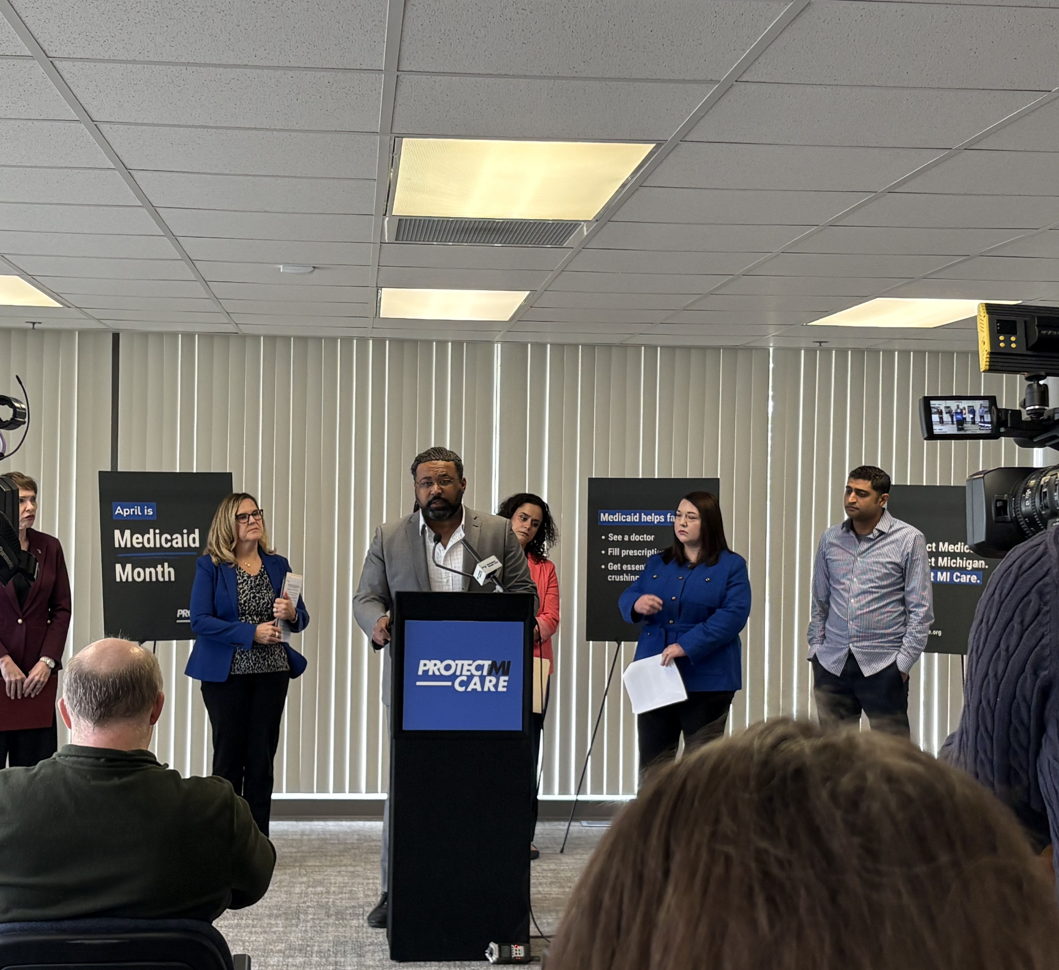
CHRT executive director, Joshua Traylor, speaks at Protect MI Care press conference

Joshua Traylor, CHRT executive director, speaks at a press conference to protect Medicaid.

Joshua Traylor, CHRT executive director, speaks at a press conference to protect Medicaid.

On April 28, our executive director, Joshua Traylor, spoke at a Protect MI Care press conference. The press conference at Care Free Medical called on the Michigan Legislature to fully fund Medicaid in the state budget and protect the program from federal cuts.

The event brought together health care providers, policy researchers, workforce development leaders, and state officials to make the case that Medicaid is essential infrastructure, not a line item to be cut.

CHRT’s research demonstrated Medicaid’s role in driving historic gains in health coverage across Michigan. According to a CHRT analysis of 16 years of data, Michigan’s uninsured rate fell from nearly 12% in 2008 to a record low of 5% in 2024, with Medicaid expansion as a primary driver. Among adults aged 19–64, the uninsured rate dropped from nearly 17% to 7.5% over the same period.

“The value of Medicaid in Michigan is measurable,” said Joshua Traylor, executive director of CHRT. “It has been a driving force behind the historic progress we’ve made in lowering our uninsured rate. With the implementation of H.R. 1, we are likely to see a dramatic increase in the number of people without health coverage in Michigan over the coming year.”

Read More

CHRT supports analysis on Michigan’s primary care workforce challenges

Primary Care

Recent coverage from The Washington Post and Bridge Michigan highlights a new report calling for increased investment in primary care to address Michigan’s physician shortage.

The article, “Michigan can ease doctor shortage by raising pay for primary care, group says,” outline how underinvestment in primary care has contributed to longer wait times, higher costs, and gaps in care. The report recommends increasing reimbursement and funding for primary care services to strengthen the healthcare system.

The work was developed by the Michigan Multipayer Initiative (MMI) team, which focuses on improving healthcare delivery and payment systems across the state. The report also points to broader system pressures, including an aging population and disparities in provider compensation between primary care physicians and specialists.

CHRT supports efforts that advance evidence-based policy and improve access to care across Michigan.

The MMI Team is based at the University of Michigan and hosted by the Center for Healthcare Research and Transformation. Learn more at https://mimultipayerinitiatives.org/

CHRT staff discuss Michigan’s crisis continuum of care with MI Mental Health

CHRT’s Nailah Henry and Nancy Baum were recently featured in Second Wave Media’s Michigan Mental Health series, which explores the state’s efforts to improve behavioral health services.

In the article, Nailah and Nancy discuss the importance of a continuum of crisis care—a coordinated system that ensures individuals receive the right mental health services at the right time. They emphasize the need for sustainable funding and collaboration among healthcare providers, policymakers, and community organizations to address service gaps.

CHRT is committed to advancing research and policy solutions that strengthen Michigan’s mental health system, and we’re glad to contribute to this important conversation.

CHRT Policy Fellowship equips health nonprofits to be advocates

The Michigan Health Endowment Fund (MHEF) recently highlighted CHRT’s Health Policy Fellowship in its latest newsletter, emphasizing the program’s impact on nonprofit leaders.

The article, “CHRT policy fellowship equips health nonprofits to be advocates,” explains why the fund invests in sending its nonprofit grantees to CHRT’s fellowship program. Through this experience, participants gain a deeper understanding of health policy and advocacy, helping them to better serve their communities.

MHEF program officer Kara Ross notes that the fellowship empowers nonprofit leaders by strengthening their ability to engage with policymakers and drive meaningful change. CHRT is proud to partner with MHEF to build advocacy capacity among health-focused nonprofits in Michigan.

ADAPTS project in MI Mental Health

Nailah Henry, a health policy analyst on CHRT’s policy team, is quoted in the January 14 MI Mental Health series story, Washtenaw County leads the way with ADAPTS mental health model. The story by Brianna Nargiso focuses on one of CHRT’s current projects: ADAPTS.

ADAPTS is a complex systems modeling project, run by CHRT’s longstanding partner Dr. Gregory Dalack, chair of the Department of Psychiatry at the University of Michigan. Built on the foundation of the Anytown, U.S. model, this local project is designed to help county leaders make evidence-based decisions about where to invest resources to improve the county’s crisis continuum of care.

A consortium of local partners has worked to inform and build the model with local data, including Washtenaw County Community Mental Health, the Trinity Health System Emergency Department, University of Michigan Psychiatric Emergency Services, and addiction treatment partners like Dawn Farm and Home of New Vision.

“ADAPTS’ innovative use of system dynamics modeling allows for a better understanding of feedback loops and interdependencies in the mental health system,” writes Nargiso. “For instance, longer wait times for psychiatric beds often result in cascading effects, such as increased arrests or extended hospital boarding, which exacerbate systemic pressures.”

CHRT’s role is to provide backbone support and facilitate cross-team collaboration.


The promise of EMS data

Patient rushed into emergency room

Erica Matti of CHRT and Joshua Legler from the National Emergency Medical Services Information System’s (NEMSIS) Technical Assistance Center gave a session at HIMSS24 explaining the significance of accurate data in EMS for effective patient care. The session emphasized the indispensable role of emergency medical services (EMS) in providing valuable insights into social determinants of health (SDOH) and stressed the urgency of healthcare synergy. You can find it here: Tapping into the trove of standardized EMS data  | Healthcare IT News

Matti shared her experience using EMS data for SDOH measures, highlighting its practical application. “Often, EMS clinicians are the first point of contact for people with emerging healthcare needs,” Matti explained, noting that they can provide nuanced insights into issues like housing instability, surpassing conventional assessments. This real-world application of EMS data underscores its potential to improve healthcare delivery and public health surveillance.

The ultimate goal is to match EMS patients to the state of Michigan’s master person index, says Matti, which would enhance patient matching and care quality through bidirectional data exchange. Moreover, initiatives like the NEMSIS EMS interoperability task force seek to align EMS data with the principled Trusted Exchange Framework and Common Agreement, fostering even broader connectivity and participation.

Integrating holds transformative potential, providing unparalleled insights into community-level health and social needs, Matti explains. “There’s no other area of healthcare where this level of info is available at the community level, and it’s a relatively untapped source of health and social needs data.”

In the news: Maximizing opioid settlement funds for substance use recovery

A Healthcare professional talking about opioid use recovery

A new article, Michigan needs coordination, collaboration spending opioid funds, highlights CHRT’s mixed methods research on opportunities to speed substance use recovery through opioid settlement fund investments.

In Gaps and opportunities for substance use recovery: Considerations for spending opioid settlement funds, CHRT highlights guidance from the state’s recovery support providers, including many with lived substance use recovery experience, about ways state and local leaders could invest opioid settlement funds to address gaps in the state’s substance use disorder recovery care system.

Bridge Michigan health reporter Robin Erb writes, “Reversing an overdose — yanking someone back from the brink of death — can take minutes. Recovery takes years.” Substance use addiction isn’t easy to “cure.” It’s best to look at it as a chronic condition, one that requires ongoing treatment and support.

Melissa Riba, CHRT’s research and evaluation director and lead author of the report, says people in recovery need wraparound support to be successful. Sometimes this means transportation to group meetings, or supportive housing environments, or medication.

And just because someone isn’t ready to quit right now doesn’t mean they don’t need services. In fact, the evidence says that syringe exchanges, naloxone distribution, and other harm reduction efforts are a great way to build trust and dialogue with substance users so when they’re ready to quit, they already have a network to support them.

New projects: From non-emergency medical transport to legislative education

Developing Community Paramedicine programs in underserved regions across Michigan

The Center for Health & Research Transformation (CHRT) is pleased to announce four new projects.

Expanding community paramedicine and mobile integrated health in mid-Michigan

This project, a collaborative initiative with Mobile Medical Response (MMR), aims to launch a community paramedicine program to address gaps in medical and social care within mid-Michigan communities.  CHRT’s role includes conducting environmental scans and needs analyses, developing a sustainable funding model for the community paramedicine program, identifying care disparities, and providing technical assistance to ensure the program’s effectiveness.

Non-emergency medical transportation (NEMT) needs and recommendations for older adults

Both Medicaid recipients and non-recipients use NEMT for essential medical and behavioral health visits. CHRT will conduct a comprehensive review of the literature and data, alongside stakeholder interviews, to identify transportation needs, barriers, and successful models from other communities. The findings will be compiled into a policy brief to guide transportation providers, healthcare entities, health payers, and policymakers.

Lessons learned from the Pfizer Foundation’s Community Health Innovation Grant Program

Running from December 2023 to December 2025, this project aims to enhance infectious disease control in underserved U.S. communities. CHRT collaborates with Direct Relief to monitor and analyze grantees’ progress. Activities include reviewing goals and metrics, attending meetings, analyzing grantee reports, and conducting interviews. The project will culminate in a comprehensive report detailing key strategies, findings, and an implementation guide for future programs​.

Health education opportunities for Michigan legislators and legislative staffers

Funded by the Michigan Health Endowment Fund, this project aims to enhance the knowledge of legislators and legislative staff on policy-relevant health topics. Due to term limits and turnover in the Michigan House and Senate, there’s a need to refresh health issue expertise regularly. CHRT collaborates with the Institute for Public Policy and Social Research and other partners to develop primers, conduct round-table discussions, and implement forums focused on behavioral health, workforce health, Medicaid, and public health​.

These projects embody CHRT’s commitment to health transformation through research, policy, and practice. We look forward to the positive impacts these initiatives will have on our communities and the broader health care landscape.

CHRT is pleased to welcome the 2024 Health Policy Fellowship cohort  

Instructor speaking to a class of fellowship students

The Center for Health and Research Transformation (CHRT) at the University of Michigan is pleased to announce its 2024 Health Policy Fellowship cohort. 

More than 125 health researchers, policymakers, and nonprofit leaders have completed the fellowship since its launch in 2012. Many fellowship alumni occupy influential roles as policymakers and leaders across Michigan. 

The 2024 fellowship cohort will include:

  • Chelsea Alcock, Legislative Assistant, 52nd District, Michigan House of Representatives
  • Dr. Frank Conyers, Clinical Assistant Professor, Department of Neurology, Michigan Medicine 
  • Samantha Cornell, Director of Community Based Services, Access Health
  • Elizabeth Crenshaw, Director of District and Constituent Services, 7th District, Michigan Senate 
  • Jennifer Day, Community Building Manager, Michigan Breastfeeding Network
  • Thye Fischman, Manager of Government Relations,  Department of Government Relations, Michigan Medicine
  • Morgan Foreman, Director of Constituent Services, 55th District, Michigan House of Representatives
  • Shannon Jackson, Program Manager, Residents in Action
  • Stephen Jackson, Policy Advisor, Michigan Senate Democrats
  • Dr. Patrick Johnson, Resident, Department of General Surgery, Michigan Medicine 
  • Dr. Beth Kuzma, Clinical Associate Professor, Department of Nursing, Michigan Medicine 
  • Kristina Leonardi, Director of Aging and Community Services Division, Michigan Department of Health and Human Services
  • Kelsey Ostergren, Director of Health Policy Initiatives, Michigan Health and Hospital Association
  • Beverly Ryskamp, Chief Operating Officer, Network 180

The program is an immersive four-month experience that brings together a diverse group of professionals to foster collaboration among policymakers, researchers, and nonprofit professionals. 

“The CHRT Fellowship enhanced my ability to think about policy—from the formulation of the research questions to the translation of the research findings to inform policy in real- time,” says Dr. Renuka Tipirneni, Assistant Professor of Internal Medicine, University of Michigan Medical School and Institute for Healthcare Policy & Innovation. “I valued going through the experience with an incredible cohort of both policymakers and researchers. This inter-sectoral peer mentorship enhanced my training and helped me build connections that I hope will last for my entire career.”

The 2024 cohort of Health Policy Fellows will engage in interactive workshops and learning sessions in Ann Arbor, Detroit, Lansing, and Washington, DC. These sessions are designed to provide fellows with opportunities to gain insights into local, state, and federal health policy landscapes. Orientation briefings will cover essential topics such as the legislative process, Michigan state government structure, strategies to effectively communicate with legislators, and the challenges in building sustainability for nonprofit organizations.

For further information about the CHRT Health Policy Fellowship and to apply for the 2025 cohort, please contact Holly Quivera Teague, Fellowship Program Manager, at [email protected].

CHRT is grateful for the generous support of our 2024 fellowship sponsors: Blue Cross Blue Shield of Michigan, the Michigan Health Endowment Fund, Michigan Medicine, and the Michigan State Medical Society.