
News

Here’s to administration: How a wonky thing like backbone support is improving one county’s homeless response system

connection

connection“When the typical homeless client is entering a shelter, they’re probably having the worst day of their life,” says Andrew Kraemer,  Washtenaw County Continuum of Care (CoC) data and evaluation specialist. 

One new strategy that organizations in Washtenaw County are using to help clients on that worst day is diversion. 

Housing Access for Washtenaw County (HAWC) and the Shelter Association of Washtenaw County (SAWC) each brought on a diversion staff member in January 2021. These diversion specialists help people on the verge of entering a shelter find alternatives, like staying with family or friends or accessing other community resources.

“The whole idea [of diversion] is that we can help people calm down and consider their options,” says Kraemer. “A lot of people do have alternatives that maybe they’re not seeing in the moment because they’ve got that crisis tunnel vision.”

In the first three months, the program diverted 44 percent of the families who participated in diversion conversations and 37 percent of the individuals. Diversion took an average of four days, versus 137 days to get a client housed in 2020. And diversion cost only $73 per individual on average, compared to $85 for just one night in shelter.

While the sample size is small, the community is excited about the results. 

“This could be pretty impactful, especially if it takes under a hundred dollars to avoid homelessness,” says Kraemer.

Backbone support–behind-the-scenes and essential

Impactful programs like diversion aren’t easy to initiate. Coordinating organizations and finding funding is challenging when nonprofits and government agencies alike are already overloaded.

So the Center for Health and Research Transformation (CHRT), a health policy center at the University of Michigan that provides backbone support to collective impact initiatives, worked with local organizations to overcome the often-invisible challenges involved in improving the homeless system of care.

“One way to conceptualize a backbone organization is that its goal is not to work one-on-one with individuals or organizations, but to create a broader understanding of what a community needs and provide capacity to address those needs in the community,” says Nancy Baum, health policy director at CHRT. 

“Backbone work is accomplished working among multiple organizations in a community, rather than between two entities, as might occur in project management or traditional consulting work,” she continues.

“A backbone organization plays a critical role in bringing community partners together to achieve common goals,” adds Patrick Kelly, the senior analyst at CHRT who worked on the housing project.

In 2019, using infrastructure and relationships set up by CHRT’s work with the State Innovation Model (SIM) and the Washtenaw Health Initiative, CHRT brought together housing and homelessness partners to identify areas of need and develop activities to improve the homeless response systems in Livingston and Washtenaw counties.

The goal: to organize a large, multipronged project to support and champion the homeless response system.

Kelly explains that throughout this project, “CHRT served in a backbone role, facilitating conversations to prioritize and agree upon issues that could be addressed within funding timelines, and dispersing funds from the Michigan Department of Health and Human Services.”

The project, a systems change opportunity given to each of Michigan’s five State Innovation Model Community Health Innovation Regions, looked at Washtenaw and Livingston counties separately to develop responses tailored to each county’s needs. 

In Livingston County, the work was focused on a housing stock assessment, a coordinated entry system, and discharge planning. In Washtenaw County, the work focused on system modeling, discharge planning, and diversion. 

Laying the groundwork for new improvements

For Washtenaw County’s diversion initiative, CHRT supported a pilot program that trained frontline workers and support staff in implementing a diversion model. 

“As a result of the pilot starting conversations and gathering data, it was recognized that this could be a useful tool in our system of care,” says Amanda Carlisle, director of the Washtenaw Housing Alliance.

“Before, we were just so busy. We were always wanting to do diversion, but we didn’t always have the time or the resources,” says Kate D’Alessio, program director at SAWC. The pilot let the community try diversion and see how well it could work. 

Then, when CARES funding arrived from the federal government as part of the $2.2 billion Coronavirus Aid, Relief, and Economic Security Act, HAWC and SAWC used those resources to fund two new positions exclusively for diversion because of the pilot’s success.

“CHRT’s role in helping us marshall that funding and then get it out into the community was instrumental,” says Kraemer. “That was the first time we put any resources towards this idea of diversion beyond talking about it as something that we just wanted to do. I don’t think we’d have diversion funded now if we hadn’t already been on that track.”

The impact of data

As in the diversion pilot, CHRT often plays a background role, identifying funding, offering support, and organizing projects that otherwise may not have been possible.

One critical prerequisite to housing work is data, which is why in parallel to the diversion project, CHRT organized a system modeling report in Washtenaw County and a housing assessment in Livingston County to determine the needs in each area.

The system modeling in Washtenaw County, conducted in spring 2020 by the national nonprofit Corporation for Supportive Housing (CSH), used a gaps analysis to determine what was needed for temporary emergency shelter and permanent housing. 

The goal of the gaps analysis, says Carlisle, was to inform policy and funding priorities. The previous community housing goal was set in 2006, and out of date.

“We knew we had a shortage of affordable housing, and supportive housing in particular,” says Carlisle. “This report was instrumental in helping us to quantify that for the community and especially for policymakers and elected officials.” 

The system modeling report, which is not yet published, includes recommendations on how many and which types of housing units are needed as well as the estimated cost.

In addition, the results highlighted racial inequities related to the use of a state-mandated assessment tool, which is known to cause inequities. 

The Washtenaw Housing Alliance is now working to identify recommended actions to counter these inequities, and has partnered with agencies to do a diversity, equity, and inclusion assessment for nonprofits in this space. 

The full report will be presented publicly this November during National Hunger & Homelessness Awareness Week. But the results have already been used to support the affordable housing millage that passed in November 2020.

“We were able to convince the Ann Arbor City Council that some of the dollars from the millage could be used for [supportive housing] services,” says Carlisle. “That was because of the system modeling report.” In addition, supportive housing is being funded by the county’s Public Safety and Mental Health Preservation millage, as well.

Carlisle expects that the new report will continue to be used to develop recommendations for how to use federal resources like COVID-19 relief dollars.

“[The system modeling report] has the potential to have a big impact and inform a lot of the decisions that are made in the community about housing development and what is needed,” says Kelly.

“The administrative back end that people don’t get to see, but that really matters”

Carlisle at WHA says she wants to express “deep appreciation for CHRT being willing to take on the housing program funding and administer that.” 

She says that the county wouldn’t have been able to do the system modeling report or even really a test diversion initiative, without having those funds available. 

“They were instrumental in helping us move forward some of our work that we’ve been wanting to do for a long time.”

“[The millage funding for supportive housing] was able to be created because of that report and the millage work that we did. And we’ve been able to leverage other dollars to continue that diversion pilot and solidify it as a program in our community. 

“I really appreciate CHRT and all the work that they did to help us get those grants and manage the administrative back end that people don’t get to see, but that really matters.”

Story by Cleoniki Kesidis
New Health Equity Project aims to significantly reduce health disparities for vulnerable residents in five Michigan counties

Rainbow-colored people

The U.S. Centers for Medicare & Medicaid Services (CMS) has pledged to provide a $9 million Medicaid match to launch a new Health Equity Project in five Michigan counties.  

The Health Equity Project aims to help these counties reduce health disparities associated with pressing social needs such as housing instability, food insecurity, transportation, health system complexity, and other socioeconomic factors by: 

  • supporting efforts to connect people from historically disadvantaged populations to needed social services, 
  • sharing data between relevant health and social service providers to facilitate improved care, 
  • providing population-based data and informatics to analysts, stakeholders, and policymakers, and
  • better engaging with, and reflecting on the views of, community members with lived experience. 

Core partners in the Health Equity Project include:

  • the Center for Health and Research Transformation (CHRT), a nonprofit health research and policy center at the University of Michigan, which will provide backbone support to the participating regional health collaboratives; 
  • the Michigan Data Collaborative (MDC), a data collection, aggregation, and reporting organization at the University of Michigan, which will collect data from a variety of sources and deliver population-based reports; 
  • the Michigan Health Information Network (MiHIN), a nonprofit collaborative that securely stores patient health information and transmits relevant patient data to legally authorized health care providers; and 
  • the Michigan Social Health Innovations to Eliminate Disparities (MSHIELD) Collaborative Quality Improvement (CQI) initiative at Michigan Medicine, supported by Blue Cross Blue Shield of Michigan, which will engage provider organizations around the state and seek to identify and promote processes that lead to improved and more equitable health care outcomes.

“We all want the same thing,” said CQI Portfolio Director Michael Englesbe, MD, ”to provide better care for Michigan’s most vulnerable residents.” Englesbe is a professor of surgery at Michigan Medicine, U-M’s Academic Medical Center. 

Terrisca Des Jardins, executive director of CHRT, is delighted to be part of this important equity work. 

“Alongside our local, regional, and state partners, we will be pursuing deeper connections, collaboration, and information sharing between health and social service organizations,” said Des Jardins. 

“Our aim is to provide a more holistic approach, and better coordination of needed services,” says Des Jardins, “to ultimately advance health equity for historically disadvantaged populations.” 

“Data that is enhanced with performance measurements and delivered through population health reports provides a critical feedback loop that enables health and social service agencies to achieve significant improvements,said Myron Hepner, director of the Michigan Data Collaborative. 

Tim Pletcher, executive director of the Michigan Health Information Network (MiHIN) Shared Services, says the organization is pleased “to support the data and interoperability infrastructure for the health equity initiative and to ensure that the data is accessible to those who care for participating patients.” 

“This project addresses an important gap in patient care between the great work of community-based organizations and health systems across the state,” said John Scott, MD, MPH, co-director of MSHIELD. 

“Using data and building collaborative partnerships will ensure that everyone has the best chance of optimal health outcomes” says MSHIELD co-director Renuka Tipirneni, MD, MSc; both Tipirneni and Scott are U-M Medical School faculty and members of the U-M Institute for Healthcare Policy and Innovation.

“Addressing underserved populations is an incredibly important priority to Blue Cross Blue Shield of Michigan,” said Amy McKenzie, MD, MBA, vice president of clinical partnerships and associate chief medical officer. “MSHIELD will be instrumental in our work to identify and eliminate inequitable health outcomes.” 

The Center for Health and Research Transformation (CHRT) will provide backbone support to the local work in Washtenaw and Livingston counties, and will also initiate a multi-region learning community to identify ways the participating Michigan counties can work together to accelerate progress.

CHRT will also provide administrative support to the four participating regions across Michigan:

  • the Genesee Community Health Access Program (G-CHAP), administered by the Greater Flint Health Coalition;
  • the Jackson Care Hub, administered by the Jackson Collaborative Network; 
  • the MI Community Care (MiCC) program in Washtenaw and Livingston Counties, administered by CHRT on behalf of the Washtenaw Health Initiative; and 
  • A community integrated health network, coordinated by Health Net of West Michigan, with multiple community partners in Kent County. 

“This project improves connections among community-based organizations so that they can work together better to serve their shared clients,” said Nancy Baum, CHRT’s director of health policy. 

“When communities support this type of coalition work,” she says, “the relationships are then already in place when it is necessary to distribute resources in a pandemic or address other complex community health and human service challenges.”

“Evidence shows that we can address inequities through partnerships between health care providers and community-based social service organizations,” said Kirk Smith, president and CEO of the Greater Flint Health Coalition. 

Maureen Kirkwood, executive director of Health Net of West Michigan, says the funding will allow Kent County’s community integrated health network to move new work forward. 

“The partnership with other communities in Michigan will help us learn from each other,” Kirkwood says, “and provide a streamlined and equitable way to assist our residents as they work to access needed services.” 

“This Health Equity Project is building upon community-led efforts to improve system design and capacity to address root causes and drivers of health disparities,” said Amy Schultz, MD, of Henry Ford Allegiance Health in Jackson. 

“The allocated funds will facilitate the use of key learnings from pioneer communities involved in this work,” says Schultz, “to scale and spread these innovative care models.”

Melissa Riba quoted in Bridge Michigan on reinstituted copays and deductibles for COVID-19 patient cost-sharing

hospital billing statement for covid

Hospital billing statement for covidBridge Michigan’s Robin Erb and Makayla Coffee quote Melissa Riba, director of research and evaluation at the Center for Health and Research Transformation (CHRT), in “Costs rising for Michigan COVID care with return of deductibles, copays.”

The story discusses an upcoming shift in patient cost burden for COVID-related illnesses—costs that have largely been waived by Michigan’s largest insurers for more than a year, ensuring that patient costs remained low.

By September 30, 2021, at least six insurers will resume charging copays and deductibles for COVID-related care.

Riba explains that while we’ve tried to encourage more Michigan residents to get vaccinated through a variety of incentives, this shift represents “the leading edge of the stick” in a carrot-and-stick approach.

She notes that shifting the COVID-19 cost burden to patients signals “moving away from the incentives to more of the penalties associated with making a choice to be non-vaccinated,” a shift that reflects a national trend among health plans as vaccines have become widely available to the public.

Dr. Michael Genord, CEO of Health Alliance Plan, agreed with her. “There’s been a lot of effort for people to take personal responsibility for the prevention of COVID that we didn’t have before.”

Insurers have noted that waivers for cost-sharing were intended to be temporary before vaccines were available.

READ THE ARTICLE

The effects of case management on ED use: CHRT research published in the Journal of General Internal Medicine

Smiling older couple across a table from a smiling woman

Case manager speaks with two patients.In a new piece published in the Journal of General Internal Medicine, Predictive model-driven hotspotting to decrease emergency department visits: A randomized controlled trial, Center for Health and Research Transformation (CHRT) staff report the results of the largest randomized trial examining the effects of case management on emergency department (ED) use.

The study was conducted by faculty and staff from Northeastern University, the University of Michigan, and Washtenaw County organizations, including lead author Brady Post, and coauthors Jeremy Lapedis, Karandeep Singh, Paul Valenstein, Ayşe Bȕyȕktȕr, Karin Teske, and Andrew Ryan. 

Recent literature suggests that case management can improve care quality and reduce ED and acute health care use. As part of the State of Michigan’s State Innovation Model, CHRT and the Washtenaw Health Initiative (WHI) organized a study to evaluate the effectiveness of predictive-model driven case management and care coordination in the Livingston-Washtenaw Community Health Innovation Region. 

Using a predictive model designed by Assistant Professor Karandeep Singh of Michigan Medicine, the Department of Learning Health Sciences, and the School of Information, patients were identified for the intervention. “Patients whose risk exceeded a threshold were randomly assigned to a group offered case management or to the control group,” write the authors. They then assessed ED visits in both groups during the six months post-intervention.

Average results showed no significant decrease in ED visits in the group that received case management.

“This study demonstrates the challenges of successfully engaging individuals with complex needs,” says coauthor and Washtenaw Health Plan director Jeremy Lapedis. “One potential place of future research and experimentation could include efforts to understand how best to engage individuals who use the ED frequently.”

The null results may be because the six-month post-intervention period was too short (other trials of case management used periods of 12 to 24 months). Case management organizations may also require more time to establish strong relationships with patients and create measurable results. The CHRT study was not able to follow participants longer due to discontinuation of funding, though the WHI did continue its care coordination pilot program beyond the time of the study.

“Our findings highlight the importance of understanding how to effectively engage complex patients in community interventions, and further underscore the need to use high-quality evaluation designs to build evidence of program effectiveness,” write the authors.

The authors emphasize that case management may still have a positive effect on patients overall. “For complex patients, case management may improve certain aspects of care delivery or the patient experience by more holistically addressing social and environmental needs.”

READ THE ARTICLE

Karin Teske and Marissa Rurka discuss new survey findings about COVID vaccine hesitancy and avoidance

covid vaccine interview

covid vaccine interviewMichigan Radio’s Kate Wells quotes Karin Teske and Marissa Rurka senior analysts at the Center for Health and Research Transformation (CHRT), in “Here are the biggest reasons Michiganders say they don’t want the COVID vaccine.”

The article describes CHRT’s recent analysis of vaccine hesitancy and avoidance, using data from a supplemental Cover Michigan survey that examined trends in vaccination rates and the reasons why Michiganders may be choosing to delay or avoid vaccination.

Teske notes that uninsured people were three times less likely to have received at least one dose of vaccine compared to those who were insured, explaining that those who “don’t have insurance [and] don’t have a medical home, may not be interacting with the health system as often and receiving those trusted messages about the safety and efficacy of the COVID vaccine.”

Teske also touches on the finding that 83 percent of those who didn’t intend to get vaccinated reported that they believe the vaccine “is too new and I want to wait to see how it works for other people,” noting this information “is pretty encouraging: the fact that we would hope that, over time, that concern might be alleviated as people see that the vaccine is safe and effective.”

The survey also found that hesitancy and avoidance reasons differed by race, and, as Rurka explains, “understanding what some of the most common concerns are [for different communities] is a helpful guide moving forward, to try and tailor messages to two different groups.”

For example, says Rurka, “we saw that respondents who were Black and Latino/Hispanic, were more concerned about the vaccine [itself],” compared to white respondents who were more likely to think they weren’t at risk for COVID-19 transmission.

READ THE ARTICLE

CHRT Fellow Dr. Romesh Nalliah warns against dental opioid prescriptions in American Journal of Preventive Medicine study covered by U.S. News

Dr. Nalliah warns against dental opioid prescriptions

Dr. Nalliah warns against dental opioid prescriptionsCHRT Health Policy fellow Dr. Romesh Nalliah recently published an article entitled “Dental Opioid Prescriptions and Overdose Risk in Patients and Their Families” in the American Journal of Preventative Medicine.

Dental opioid prescriptions are one of the most widely used medications for chronic pain. When a patient receives a dental procedure, such as a tooth extraction or root canal, they are often given an opioid prescription to treat their pain. These medications can be very beneficial for treating chronic pain, but there are also many potential side effects that patients should be aware of before taking them.

The study analyzed data from 8.5 million Americans who received dental work between 2011 and 2018. They found that the overall rate of opioid overdoses was 2.5 times higher among patients who filled an opioid prescription after their procedure compared to those who did not. The rate of overdose among family members of the dental patient was also higher if the patient filled an opioid prescription: 1.7 per 10,000 procedures versus 1 per 10,000 procedures.

U.S. News covered the study in a story by Robert Preidt titled Opioids After Dental Work May Be Dangerous. The story quoted Dr. Nalliah saying, “When a dentist, like me, prescribes an opioid to a patient I am putting their entire family at risk of overdose. Dentists should consider, if the family concerned was yours, would you take that risk?”

Dr. Romesh Nalliah is a former CHRT Health Policy Fellow, associate dean for patient services, and clinical professor of dentistry at the U-M School of Dentistry.

Freep reports Michigan did not undercount nursing home COVID-19 deaths, citing CHRT study

Senior in Nursing Home during Covid-19

On June 3, 2021, the Detroit Free Press cited the Center for Health and Research Transformation’s (CHRT) report on nursing home policies in Michigan during COVID-19 for an article about whether or not the state undercounted assisted living facility COVID-19 deaths.  Senior in Nursing Home during Covid-19

Written by Dave Boucher, the Freep article describes the claims that Michigan is undercounting pandemic-related assisted living facility deaths and that the policies of Gov. Grethen Whitmer contributed to those deaths. Boucher reports that Michigan did not undercount pandemic-related nursing home deaths, though deaths at smaller long-term care facilities may have been missed.

Department of Health and Human Services Director Elizabeth Hertel said,

The number (of pandemic-related nursing home deaths) that is being reported is accurate because the number that we have reported on our website is the self-reported number from the nursing homes.

Michigan Attorney General Dana Nessel announced that she would not investigate Gov. Whitmer or her administration on the subject of nursing home policies, and cited CHRT’s report which found no evidence that Gov. Whitmer’s nursing home policies contributed to COVID-19 transmission, and concluded that the decision “was executed in a crisis situation and was an appropriate response to the surge of COVID-19 cases in Michigan.”

CHRT’s study did, however, include a number of recommendations for the state to implement to improve wellness and safety for nursing home residents during the remainder of the pandemic. A number of these have already been implemented. 

READ THE ARTICLE

Four new projects focus on financing for supportive housing, peer support for SUD, community paramedicine reimbursement, and CCBHC evaluation

Pencil drawing a lightbulb

The Center for Health and Research Transformation (CHRT) has taken on several new projects. The four most recent projects include research on innovative financing models for supportive housing, a pilot for a peer support program for those struggling with Substance Use Disorder (SUD), sustainability research for Community Paramedicine, and an analysis of Michigan’s CCBHC demonstrations.

For the first project, CHRT is conducting research, funded by the Michigan Department of Health and Human Services, on innovative financing models for supportive housing. This project builds on a successful permanent supportive housing pilot that addressed the intersection of homelessness and chronic illness. CHRT will review and report on federal, state, foundation, and private sector financing mechanisms for supportive housing initiatives.

A second project is a Peer Support Program for the United Auto Workers (UAW) union. CHRT has partnered with UAW to develop, implement, and evaluate a Peer Support Program for union members who are struggling with Substance Use Disorder (SUD) or who have a loved one with SUD. The volunteer-based program will first be launched at two UAW manufacturing facilities and then evaluated for effectiveness and scalability. CHRT will also make recommendations on how to change employer workplace drug-use policies to encourage more employees to seek help.

For our third project, CHRT has partnered with Huron Valley Ambulance (HVA) to analyze and eventually help create reimbursement strategies for their Community Paramedicine (CP) program. The CP program intends to improve care delivery and reduce costs by providing comprehensive care for low-acuity 911 calls in the patient’s home. From 2016-2018, HVA’s CP program saved an estimated $2.3 million by treating 53 percent of patients in place, instead of the 1.6 percent of patients treated in place by non-CP paramedics. However, HVA has not been able to obtain reimbursements to cover the full cost of CP care. CHRT will develop a more contextual understanding of HVA’s CP program and explore reimbursement rates and policies.

And most recently, CHRT has heard that it will be working with the Michigan Department of Health and Human Services, with funding from the Michigan Health Endowment Fund, to conduct a thorough evaluation of Michigan’s Certified Community Behavioral Health Clinics (CCBHCs) to understand their impact and guide future expansion efforts. CCBHCs offer a new model of care with the potential to increase access to behavioral health services statewide.

To learn more about CHRT’s research, evaluation, and policy projects, visit our projects page.

Please join us in welcoming our newest team members, who bring expertise in gerontology, sociology, and user experience

CHRT's Newest Team Memebers

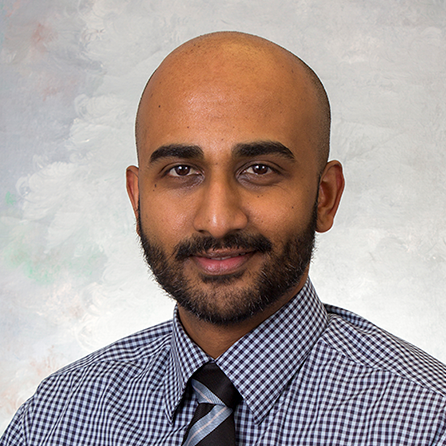
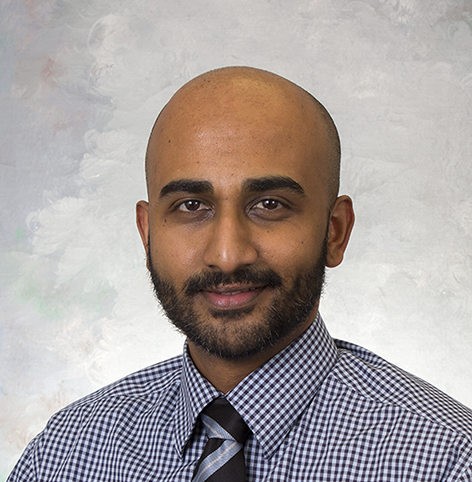
We’re excited to welcome our newest team members –Marissa Rurka, Erin Horne, and Vinusha Devarakonda. We’re happy to have them and looking forward to working with them.CHRT's Newest Team Memebers

Marissa Rurka

Marissa Rurka is a senior research and evaluation analyst at CHRT and a Ph.D. candidate in gerontology and sociology. Before joining CHRT, Marissa assisted with an evaluation of Minnesota’s value-based reimbursement policies for nursing facilities. In particular, her role was to evaluate a measure of long-stay resident quality of life.

Prior to that, Marissa served as a research assistant and graduate project coordinator for the Within-Family Differences Study, a panel survey exploring the implications of family relationships and caregiving for health and well-being. Marissa has also interned at the Patient-Centered Outcomes Research Institute (PCORI), where she analyzed PCORI’s portfolios of comparative effectiveness research studies related to advanced illness and caregiving.

At CHRT, Marissa will assist with the Cover Michigan and Michigan Physician Surveys, which collect data and perspectives from Michigan residents and primary care physicians. She will also support projects related to healthy aging, family caregiving, and social determinants of health. She has published in the Journal of Gerontology: Social Sciences and The Gerontologist.

Erin Horne

Erin Horne is CHRT’s Community Engagement Program Manager. She provides strategic support on racial health care equity and justice for the Washtenaw Health Initiative (WHI). She also works closely with Vital Seniors and the Healthy Aging Collaborative to create enduring outcomes for vulnerable elders and their caregivers in Washtenaw County, supported by data and research.

Prior to joining CHRT, Erin primarily worked in clinical psychiatric spaces. She has worked for non-profits, hospitals, and Michigan Medicine’s Department of Psychiatry Sleep and Circadian Research unit. After realizing that policy and systemic flaws hindered effective treatment for clients and patients, she began to pursue macro social work and public health. Her passion lies within diversity, equity, and inclusion informed policy to advance quality healthcare delivery for oppressed identities.

Erin holds a master’s degree in social work from the University of Michigan with a concentration in management in human services. She obtained her bachelor’s from the University of Michigan – Dearborn in behavioral and biological Sciences.

Vinusha Devarakonda

Vinusha is a master’s student at the University of Michigan School of Information with a focus on human-computer interaction and user experience (UX) research and design. During her time at the School of Information, she has worked on various UX projects with the Department of Veteran’s Affairs, Gale Cengage, and the Michigan Institute for Clinical Health Research (MiCHR).

At CHRT, Vinusha will support CHRT’s communications team as it conducts an analysis and usability testing of the Washtenaw County Community Mental Health website. She is passionate about incorporating accessibility into design and using design principles to promote inclusivity and equity. She is especially interested in the intersection of health and UX design.

Vinusha holds a bachelor of science degree in health science from Manipal University, a bachelor of biological science from the University of Michigan – Dearborn and has experience as a network engineering consultant at AT&T.

New Board Members: Toshiki Masaki of the Asian and Pacific American Affairs Commission and Dr. Amy McKenzie of BCBSM

Toshiki Masaki and Dr. Amy McKenzie

CHRT is delighted to welcome to its board of directors Toshiki Masaki, former chair of the State of Michigan Asian and Pacific American Affairs Commission, and Dr. Amy McKenzie, associate chief medical officer for provider engagement at Blue Cross Blue Shield of Michigan.

Amy McKenzie, MD, MBA is a board-certified family medicine physician with 13 years of experience in private practice and over seven years of experience in health care administration and clinical leadership. She joined Blue Cross Blue Shield of Michigan in 2013 as a physician consultant supporting quality management and accreditation. She is now the associate chief medical officer leading provider engagement. 

In her current role, Dr. McKenzie and her team provide clinical leadership for value-based provider programs and risk contracting. She helps to enable and support the provider network through education, communication, and practice transformation partnerships. She also leads a team responsible for BCBSM’s enterprise-wide behavioral health strategy. Read more. 

Toshiki Masaki retired at the end of 2018 from the Ford Motor Company where he held a variety of leadership positions in vehicle engineering, finance, global data insights and analytics, government and community relations, and purchasing. His last position was as a manager in global data insights and analytics. Before that, he was senior manager of government relations, where his responsibilities included public policy and economic impact analyses, and management of Ford’s global career development and training program in government relations. 

Masaki served on Michigan’s Asian and Pacific American Affairs Commission from 2013 to 2020. The commission is charged with advising the Governor and the State Legislatures on issues concerning Asia and Pacific Americans in the state and serving Asian and Pacific American communities to inform them of state resources available to all Michigan residents. Read more.

We are excited to have Mr. Masaki and Dr. McKenzie as part of our board and we look forward to working with them and welcoming them into the CHRT family.