News

CHRT’s Matt Hill in opioid overdose prevention article

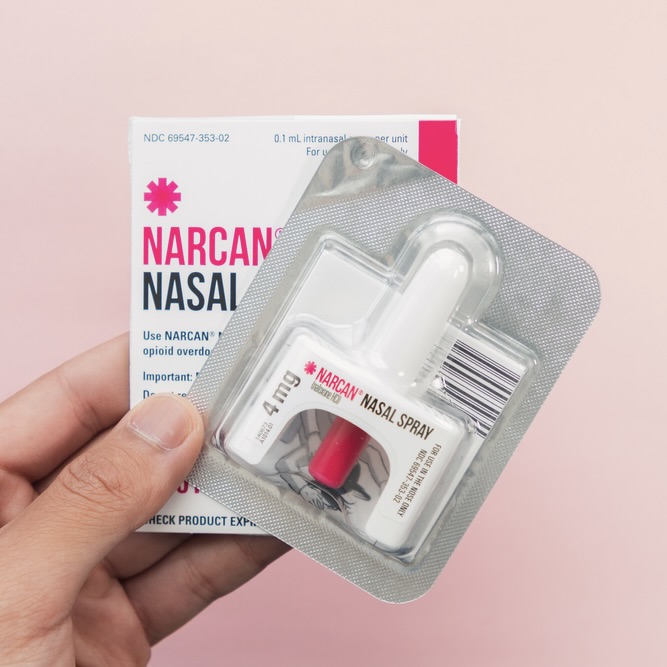
Hand holding Narcan Nasal Spray

Between 2020 and 2021, the U.S. experienced a 28 percent increase in opioid overdose deaths. In Washtenaw County, opioid overdose deaths increased by 26% in the same timeframe. 

A Concentrate article by Estelle Slootmaker titled “How can Washtenaw County turn around a startling rise in opioid overdose deaths?” highlights organizations in the county — like Washtenaw Recovery Advocacy Project, Home of New Vision, and the Washtenaw Health Initiative’s Opioid Project — working to decrease substance use and overdoses. The article interviews Matthew Hill, CHRT program manager who helps facilitate the Washtenaw Health Initative’s Opioid Project, about overdose prevention in the community.

While the traditional approach to substance use treatment follows a “come get help when you’re ready to stop using” ideology, Hill explains, a harm reduction model is more effective. 

With the harm reduction model, treatment is achieved by developing relationships with people currently using, meeting them where they’re at, and working with them until they are ready to overcome their addiction. Part of this approach includes efforts to increase free naloxone distribution in Washtenaw County. Naloxone, more commonly known by its brand name Narcan, is a medicine that can reverse an opioid overdose.

“We’ve had a dramatic expansion of access to naloxone,” Hill says. “That switch to the harm reduction model has been huge in Washtenaw County. Unified [an Ypsilanti-based harm reduction organization] is doing great work with their syringe service exchange program, naloxone distribution, and getting people connected to health resources when they have other health events related to substance use.”

Hill says that while legislative progress is being made, there are many challenges to overcome in preventing opioid overdoses. One discrepancy Hill notes is racial disparities: 19 percent of Washtenaw County’s opioid overdoses were among Black residents, despite them constituting only 12 percent of the county’s population. Additionally, Hill emphasizes the importance of education surrounding substance use.

“The ‘just say no’ philosophy is really harmful. That didn’t work. I myself came from the [Drug Abuse Resistance Education] DARE era. Being a person in recovery, I can tell you, that didn’t work for me,” he says. “We know that young people are going to experiment. If they’re going to experiment with drugs, they should know to do that with a group of people. They should know to have naloxone on hand just in case, even if they’re not ingesting opioids. Having some practical knowledge and practical education can really reduce the effects of accidental overdose.”

Naloxone is currently available in free vending machines at the Washtenaw County Health Department, Ann Arbor District Library, and Washtenaw County Sheriff’s Office Reentry Center. 

READ SECOND WAVE’S ARTICLE

New CHRT projects explore the root causes of opioid overdose in one Michigan county and infectious disease control innovations across the U.S.

Man facing 2 staircases

The Center for Health and Research Transformation (CHRT) has begun two new projects in recent months.

Innovations in infectious disease control 

CHRT will synthesize lessons from Pfizer’s Direct Relief Innovation Awards in Community Health. Direct Relief, a humanitarian aid organization focused on improving the health and lives of people affected by poverty or emergencies, gave these awards to Federally-Qualified Health Centers and other clinics to help address infectious disease in underserved communities during the COVID-19 pandemic. 

Two members of the CHRT team will attend a two-day learning summit to hear from Direct Relief awardees about their projects, the challenges they sought to address, and what they learned and achieved along the way. Topics will include strategies to prevent and treat infectious diseases, such as mobile vaccine clinics and offering flu vaccine uptake and PrEP at primary care visits. 

CHRT will conduct a thematic analysis of the information gathered at the summit and synthesize results. CHRT will then share learnings and themes from the summit, such as common challenges, successes, and strategies shared by the awardees. 

CHRT’s analysis will be distributed to Direct Relief’s partner network of over 1,500 Federally Qualified Health Centers, community health centers, free and charitable safety net clinics, as well as the National Association of Community Health Centers and the National Association of Free and Charitable Clinics. 

Backbone support for the Washtenaw County opioid summit

For the last 13 years, CHRT has provided backbone support to the Washtenaw Health Initiative (WHI) Opioid Project. This has included helping project members organize an annual opioid summit designed to address the root causes of opioid overdose in the county. The 2022 opioid summit brought together 141 participants from over 60 organizations across Michigan to remember those lost and celebrate hope and recovery. In 2020, an online opioid summit drew 175 participants from over 65 organizations to discuss the impact of the COVID-19 pandemic on Washtenaw’s treatment and recovery system.

In 2023, the WHI Opioid Project and the Washtenaw Recovery Advocacy Project (WRAP), a program of Home of New Vision, will organize the summit together. CHRT will facilitate a committee to define the audience, objectives, and content of the summit, to contact presenters, and to develop and execute a promotional plan. CHRT will also prepare the technological resources and provide technical operations for the hybrid summit in September. After the summit, CHRT will conduct a post-summit participant survey and analyze results. CHRT will also arrange continuing education credit opportunities for participants.

Medicare’s $35 per month insulin cap excludes many Michigan diabetics

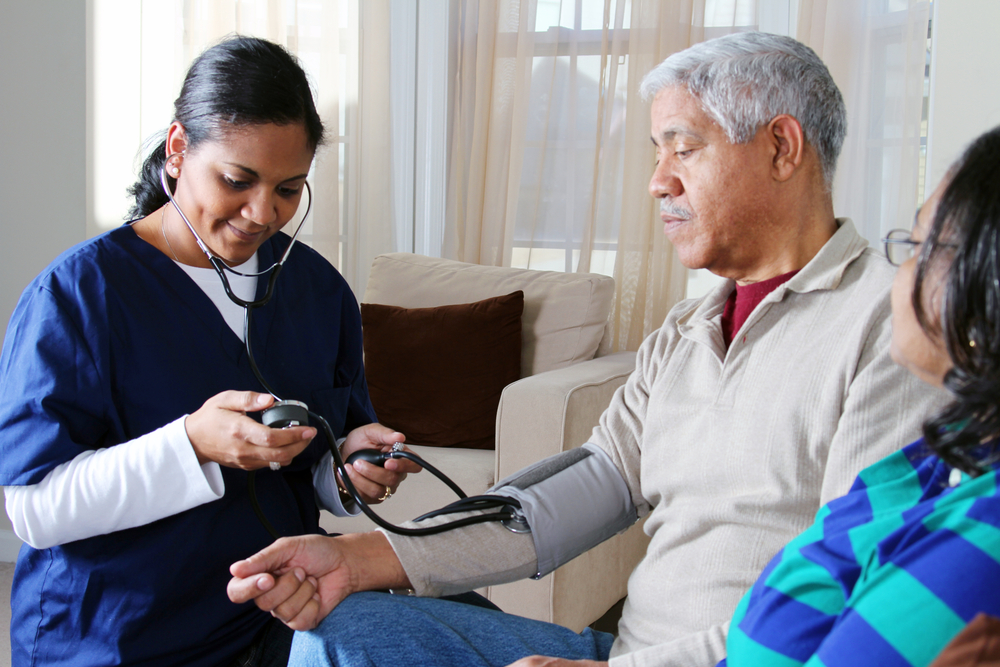
Caregiver taking male's blood pressure

CHRT Senior Policy Analyst Emma Golub was quoted in a Bridge Michigan article commenting on Medicare’s $35 per month insulin cap that went into effect on Jan. 1 and the broader issue of medication affordability. 

The cap on insulin prices is a win for the estimated 122,000 diabetics in Michigan on Medicare, as without it this medication can cost up to $2,000 per month. However, the shift in Medicare coverage excludes more than 900,000 diabetics who don’t qualify for Medicare, and therefore won’t benefit from the insulin cap.

Additionally, some diabetics who are covered by Medicare still find themselves straddled with high costs for other medications. 

Kent County resident Pam Bloink, who was interviewed for the Bridge Michigan article, is on Medicare and said she takes nine other medications in addition to insulin, for ailments including high blood pressure, cholesterol, depression, and heart issues. She spent more than $7,000 on medications last year, as Medicare left her without coverage for many of her prescriptions. 

“Prescription drug affordability continues to be a major hole in our healthcare system,” says Golub. “Lifesaving drugs are only lifesaving if people can afford them.” 

The American Association of Retired People (AARP) estimates that 32 percent of Michigan adults skip taking medications due to cost. Insulin prices have soared in the U.S. over the past decade—in 2020, they were more than eight times as high as prices in 32 other high-income nations, according to a RAND Corporation study.

Other drug prices have exponentially risen in recent years as well, such as EpiPen. A self-injecting device for a drug that neutralizes severe allergic reactions, its cost rose from just over $100 in 2009 to $608.61 in 2016. 

In October, Michigan Governor Gretchen Whitmer issued an executive order to build an insulin manufacturing facility in Michigan for in-state residents, and designated $150 million for its construction in her fiscal 2024 budget. State health insurers endorsed the plan, applauding Whitmer’s efforts to lower insulin prices in Michigan. 

But a 2020 study published in JAMA Internal Medicine found that insulin accounted for just 18 percent of out-of-pocket diabetes expenses for people with Type 1 diabetes on private insurance. Of the $2,500 per year average out-of-pocket cost for this population, insulin pumps, syringes, and glucose monitors accounted for the majority.

Pediatrician Kao-Ping Chua, a researcher at Michigan Medicine’s C.S. Mott Children’s Hospital and the study’s lead author, told Bridge, “The danger is that if you are solely focused on insulin, it doesn’t help people with diabetes with their other expenses.”

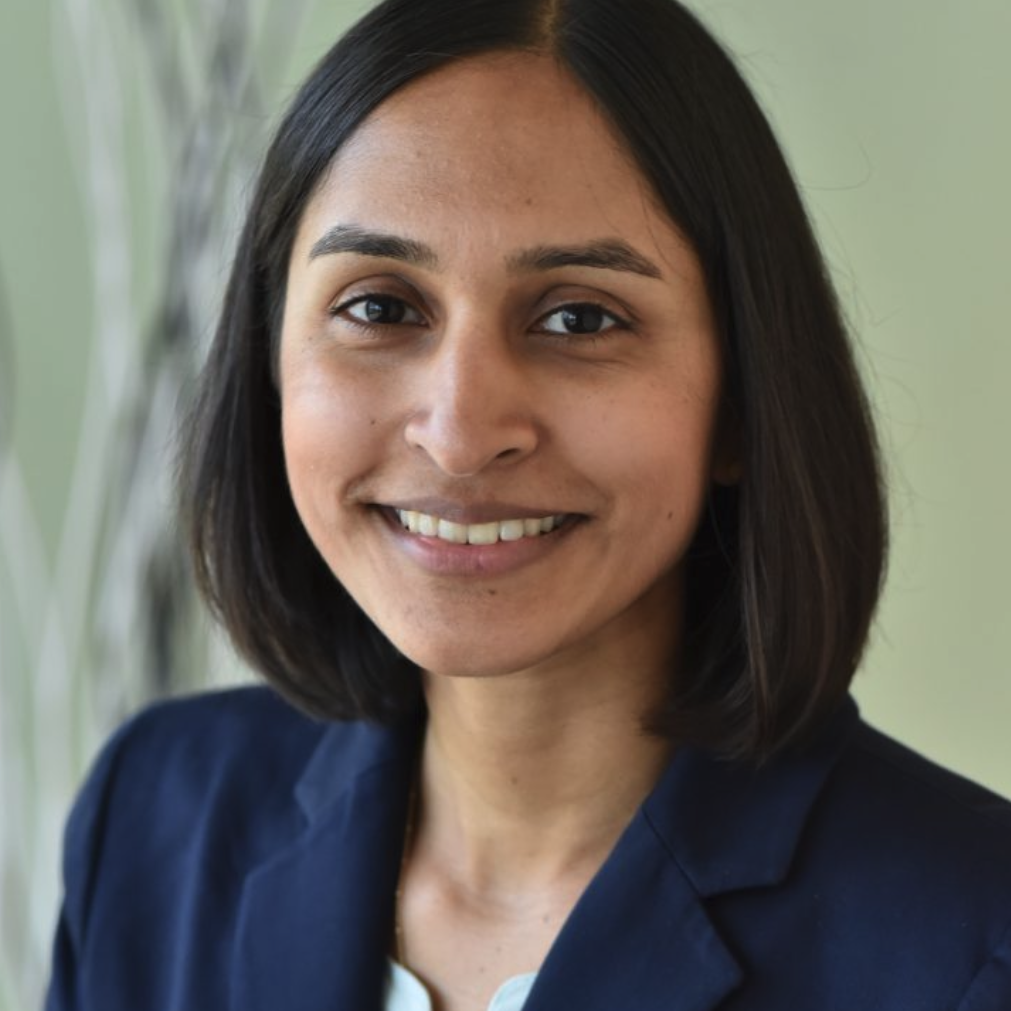
Meet Robyn Rontal, CHRT’s interim executive director

Robyn Rontal

Robyn Rontal

We are pleased to announce that Robyn Rontal is the new interim executive director of CHRT. We at CHRT are excited to have her lead the organization.

For over two years, Terrisca Des Jardins has led CHRT as executive director–advancing CHRT’s portfolio and impact, maturing CHRT’s fiscal and operational strength, and realizing significant advancements in diversity, equity, and inclusion.

On February 1, Robyn Rontal, policy analytics director at CHRT, stepped into the role as interim executive director while CHRT’s Board of Directors launched a search for a permanent replacement.  

Des Jardins is taking on a new role that will allow her to advance her reach and impact for populations she cares deeply about: She’ll serve as Michigan Plan President of Molina Healthcare beginning March 6. In the interim, Des Jardins will help with Rontal’s transition.

Rontal will provide steady and solid leadership until the CHRT Board appoints someone permanently. She will carry out the plans and priorities CHRT and its Board have identified for 2023 and beyond. 

Rontal has had significant reach and meaningful impact in Michigan and beyond as leader of a number of long-term services and support initiatives, healthy aging programs, and rehabilitation research projects. 

CHRT staff do not anticipate any interruption in work with partners. We at CHRT truly value our work and long-standing relationships and look forward to continued collaboration and service in the years to come.


Welcoming four new team members

Four New Team Members

Four New Team Members

Since our last newsletter, CHRT has welcomed four new team members. 

William Bishop

William Bishop is a community initiatives intern at CHRT. Bishop supports the data analytics team at CHRT, including work on the Washtenaw Health Initiative and Healthy Aging at Home Network (HAHN). Bishop is an MSW candidate at the University of Michigan School of Social Work with an emphasis on policy and political social work. Prior to his graduate studies, Bishop obtained a BS in psychology at Eastern Michigan University. Bishop has volunteered with AmeriCorps, and through FEMA and other non-profits, has helped organize relief efforts for disaster survivors across the country. 

Jennifer Black

Jennifer Black is a project coordinator at CHRT. She supports CHRT’s ongoing work to build a community-integrated health network which will provide services addressing health-related social needs to Michigan communities. Black provides project management and business planning support. Prior to joining CHRT, Black spent a decade working for hospitals, academic medical centers, health systems, research institutions, long-term care providers, health care providers, research consortiums, and nonprofit organizations on a wide range of regulatory, strategic, and transactional projects. She has extensive experience working with local, state, and federal agencies in grants and contracting, and in matters of governance and administration.

Dana Elobaid

Dana Elobaid is a communications intern at CHRT. Elobaid is a sophomore at the University of Michigan, studying Philosophy, Politics, and Economics, with a minor in Quantitative Methods. She works with the communications team to assist CHRT’s public sector clients by promoting services and community resources. Elobaid is interested in healthcare policy, expansion of accessible mental health services, prevention-based approaches in schools, as well as housing policy and urban planning. Outside of CHRT, Elobaid is copy chief for the Michigan Daily, as well as an American politics editor for the Michigan Journal of Political Science.

Sheritha Rayford

Sheritha Rayford is a program manager on CHRT’s research and evaluation team. Rayford recently graduated with her master’s degree from the Rollins School of Public Health at Emory University. She has worked globally and locally with various non-profit organizations. While at Rollins, Rayford participated in various public health research projects in the areas of global nutritional programs, how the pandemic affected working parents in Georgia, and health communications. She is enthusiastic about raising awareness of how social determinants of health impact marginalized and underserved minority populations.

We want to take this opportunity to extend a warm welcome to our new team members.

Board member Renu Tipirneni receives the Jerome W. Conn Award for Excellence in Research

Dr. Renu Tipirneni

Renu Tipirneni

In June, CHRT Board of Directors member Renu Tipirneni received the Jerome W. Conn Award for Excellence in Research from the University of Michigan Department of Internal Medicine.

Dr. Tipirneni is an assistant professor at the medical school. Her research focuses on health reform, Medicaid policy, healthy aging, and social determinants of health. 

Her current research includes evaluating Michigan’s Medicaid expansion and work requirements policy, exploring integration techniques for behavioral and physical health care, and screening for social needs in health care settings. 

At CHRT, Dr. Tiprineni is involved with the Promotion of Health Equity project, which aims to significantly reduce health disparities for vulnerable residents in five Michigan counties. She will help develop a system to share data between relevant health and social service providers to facilitate improved care. 

“Using data and building collaborative partnerships will ensure that everyone has the best chance of optimal health outcomes,” says Dr. Tiprineni in a press release

In addition to her role and research at the medical school, Dr. Tipirneni is a faculty advisor to IHPI’s Policy Engagement & External Relations team and as co-director of National Clinician Scholars Program.  

CHRT welcomes eight new team members

New Employee Binders

Headshots of the eight new team members.Full time staff members

CHRT has welcomed five new full time staff members.

Tiffany R. Brent is CHRT’s business development director. She has extensive experience in the public health sector, working in the nonprofit health care community with and for various organizations, partnerships, and collaborations throughout her career. Prior to joining CHRT, Brent was ​​executive director of the Voices of Detroit Initiative (VODI) and also held positions at Southeast Michigan Beacon Community (SEMBC), Greater Detroit Area Health Council (GDAHC), and Soar Technology, Inc. Brent holds a juris doctorate from the University of Detroit Mercy School of Law and a bachelor’s degree in social relations and policy from Michigan State University’s James Madison College

Jeni Chapman is a project manager on CHRT’s finance team. She supports CHRT’s work partnering with community organizations focused on enhancing quality of life and removing barriers to improve health equity. Before joining CHRT, Chapman was the project and regulatory coordinator for the Physician Organization of Michigan Accountable Care Organization (POM ACO).

Brady Kinnersley is CHRT’s financial specialist. Kinnersley works with CHRT’s business development and programmatic teams on project budgets and spend down reports. Before joining CHRT, Kinnersley was a grants accounting analyst at the University of Toledo in Ohio. He has experience reviewing, analyzing, and evaluating the grant budget process, developing financial reports, and providing oversight on externally funded grants and contracts. Kinnersley is an alumnus of Pi Sigma Epsilon, a professional sales and marketing business fraternity. He is currently pursuing a master’s degree in finance and holds a bachelor’s degree in finance from the University of Toledo.

Kimberly Snodgrass is a health communications analyst at CHRT. She supports communications for Washtenaw County’s Public Safety and Mental Health Preservation Millage, Washtenaw County’s Law Enforcement Assisted Diversion and Deflection program, the Washtenaw Health Initiative, and more. She is a recent graduate of the University of Michigan’s School of Public Health, where she concentrated in health behavior and health education. She has a particular interest in primary prevention strategies and using low-cost health communications strategies to connect individuals to care. Prior to joining CHRT as a full time staff member, Snodgrass supported the communications team part-time for nearly two years as a intern. Snodgrass has also worked in suicide prevention for the American Foundation for Suicide Prevention and at the University of Michigan Prevention Research Center.  

Holly Quivera Teague is a health policy analyst at CHRT, where she began her work as the 2022 Rebecca Copeland Intern. Quivera Teague is managing CHRT’s two fellowship programs and supporting other health policy projects. Quivera Teague graduated from the University of Michigan’s School of Public Heath, concentrating in health behavior and health education, in the spring of 2022. She has interests in health equity and social justice, including improving child health policies, reducing health disparities, improving health care utilization among people of color and undocumented immigrants, researching place-based and occupational health outcomes, and improving health and social service integration in communities of color.

Interns 

CHRT is happy to welcome three interns.

Jadrienne Horton joined CHRT through the American Evaluation Association’s 2022-2023 Graduate Education Diversity Internship program. At CHRT, Horton will be supporting the research and evaluation team with the evaluation of Washtenaw County’s Law Enforcement Assisted Diversion and Deflection (LEADD) program. In 2017, Horton obtained her bachelor’s degree in health and community wellness with a minor in social services from the University of West Georgia. She is now a dual master’s candidate in public health and social work at the University of Michigan. She has interests in working with marginalized racial and ethnic minority groups and underserved populations to raise awareness about environmental and social injustices impacting their communities. She is also passionate about incorporating race equity into evaluation and research practices. 

Abigail Lindsay is an intern working on CHRT’s policy data analytics team to improve community-based long-term care services for vulnerable seniors and individuals with disabilities. Lindsay is a second-year master’s student at the University of Michigan’s School of Public Health concentrating in health management and policy. She is passionate about improving community health by advocating for just policies that address upstream social determinants of health. She has interests in aging, health equity, healthy community design, health care reform, and social welfare programs. She obtained her bachelor’s degree in nursing from the University of Michigan in 2017. Before starting her master’s, she practiced as a critical care registered nurse delivering clinical care at teaching hospitals, where she led quality improvement projects to enhance patient safety. Additionally, she worked as a nurse epidemiologist for the Detroit Health Department, where she managed a specialty COVID-19 investigation team that assessed infection control practices to isolate and interrupt outbreaks in nursing homes.

Kyra Martin is a health policy intern at CHRT, working primarily with the MI Community Care team to provide long-term, coordinated, and multidisciplinary care management for people with complex needs. Martin is a second-year master’s student at the University of Michigan’s Gerald R. Ford School of Public Policy, concentrating on public health and policy analysis. She is passionate about using data to identify, research, and advocate for policy solutions to health crises. She has interests in health equity and women’s public health, including reproductive justice, intimate partner violence, and maternal mortality. Before coming to Michigan, Martin was a legislative intern on the Hill and worked at the American Institutes for Research conducting mixed-methods research and evaluation. Martin graduated from the University of Chicago in 2018 with a BA in economics and political science.

Four new projects focus on opioid settlement investments, integration, disability care, and behavioral health

Digital flowchart with various symbols

A graphic with project icons on a blurry blue background.The Center for Health and Research Transformation (CHRT) has taken on several new projects over the last few months.

Opioid settlement investments

In the first project, the Center for Health and Research Transformation will provide Michigan recipients of opioid settlement funds with information about evidence-based, evidence-informed, and promising practices to address the opioid epidemic. CHRT will conduct a comprehensive environmental scan of programs and data to identify gaps and “pain points” that help municipalities decide how to put their settlement dollars to use. To accomplish this, CHRT will:

  • provide municipalities with information about evidence-based interventions that could be implemented using settlement funds, with a focus on programs that have no other source of funding;
  • assess current, evidence-based best practices and identify how settlement funds can be used to enhance and improve existing programs;
  • provide local decision makers with information regarding the current state of funding for OUD/SUD treatment, including the publicly funded behavioral health care system
  • provide local decisions makers with Michigan’s established criteria for spending settlement funds, and
  • partner with Michigan’s research universities, the State of Michigan, and local municipal organizations to coordinate efforts and develop a technical assistance support system for local efforts.

Public health and primary care integration

In the second project, CHRT will build on the pilot work it completed for the ABIM Foundation to understand best practices in public health and primary care integration. The new project will begin with a landscape analysis of state and local public health and primary care integration efforts across the country. Then the team will conduct interviews with experts and leaders in this space. Finally, CHRT will develop detailed case studies of three innovative states—North Carolina, Washington, DC, and Rhode Island—to illuminate which strategies, tools, and policy levers were employed by these states. CHRT will create a detailed case study of Michigan integration efforts to identify paths to advance the state’s integration and coordination work. Finally, findings will be used to develop a resource guide that includes action items and recommendations that can be employed at the state and local levels to catalyze the integration of public health and primary care systems.

Equity for people from marginalized communities with disabilities

In the third project, CHRT will join a newly funded Equity Center dedicated to enhancing the health and functioning of individuals with disabilities–particularly those from marginalized and underserved communities–through research, education, program development, and policy change. The University of Michigan Center for Disability Health and Wellness (CDHW), outside organizations, and outside investigators will work with the new center to identify and address health care disparities experienced by individuals with physical, cognitive, sensory, and developmental disabilities from marginalized backgrounds through a series of interrelated research projects, rigorous training, knowledge translation, and technical assistance activities. In this project, CHRT’s will enhance the capacity of community organizations and researchers across the United States to create evidence-based policy changes related to equity and disability health. To do this, CHRT will conduct webinars several times throughout the course of the grant, focusing on the policymaking and advocacy process.

Evaluation of Michigan’s Certified Community Behavioral Health Clinics

Finally, CHRT has recently heard that it will be working with the Michigan Department of Health and Human Services, funded by the Michigan Health Endowment Fund, to conduct a thorough evaluation of Michigan’s Certified Community Behavioral Health Clinics (CCBHCs) to determine their impact and guide future expansion in Michigan. CCBHCs offer a new model of care with the potential to increase access to behavioral health services statewide.

Ten years, 122 health policy fellows

Michigan Capitol Building

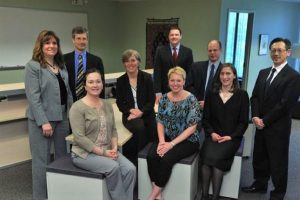
A photo of 9 health policy fellows in business dress sitting and standing together.

In 2012, the Center for Health and Research Transformation (CHRT) launched its first-ever health policy fellowship. Since then, CHRT has welcomed ten fellowship classes of 10-15 fellows per year for a four-month program designed to teach them about health research, policy, and practice.

Fellows bring expertise from their careers in policy, research, and nonprofit management. In the program, policymakers gain a deeper understanding of pressing health issues of the day. Researchers learn effective ways to share their work in the policy space. And nonprofit fellows learn about policy and research, while bringing their own real-world perspectives to the table. 

The fellows travel to Detroit, Lansing, and Washington, DC to meet local, state and national elected officials and to better understand the intricate workings of health policy. In addition, research fellows develop op-eds, one-pagers, and other deliverables, getting real-time feedback from health policy experts and nonprofit leaders. 

Fellows also attend small group discussions and seminar-style presentations covering:

  • the history of health insurance and reforms, including the Affordable Care Act, including what they’ve made possible and the challenges that remain,
  • lessons in effective policy advocacy for researchers who hope to inform policymakers and practitioners for real-world impact,
  • health spending trends and implications, including prescription drug and insurance pricing,
  • provider and health plan efforts to maximize quality, eliminate inequities, and minimize costs, some of the biggest challenges of our time,
  • key policy issue updates with some of the top health legislators and influencers in Detroit, Lansing, and DC,
  • media engagement strategies, including meetings with some of the top media experts and training on how to write op-eds and one-pagers from experts in the field,
  • health policy perspectives of small and large businesses—key purchasers of health care insurance, and
  • introductions to cutting-edge clinical research and timely health policy issues in Michigan and across the nation.

In addition, fellows meet with a growing network of over one hundred fellowship alumni including:

  • Policymakers like Elizabeth Hertel, director of the Michigan Department of Health and Human Services (2012), Shaquila Myers, chief of staff for Lieutenant Governor Garlin Gilchrist and senior advisor to Governor Gretchen Whitmer (2017), and Renée Smiddy, director of policy at the Michigan Health and Hospital Association (2016).
  • Researchers like Dr. Michelle Moniz, obstetrician-gynecologist at the University of Michigan Medical School (2018); Dr. Mark Peterson, physical medicine and rehabilitation specialist at the University of Michigan Medical School (2019), and Dr. Renu Tipirneni, internal medicine practitioner and Healthy Michigan Plan evaluator at the University of Michigan Medical School (2018).
  • Nonprofit leaders like Kristie King, association executive at the Southeast Michigan Senior Regional Collaborative (2022), Elise Bur, director of the Northern Michigan Center for Rural Health (2022), and Kimberly Motter, director of quality and training at Reliance Community Care Partners (2022).

Over the last ten years, CHRT fellows have met dozens of state senate and house majority and minority leaders like Abdullah Hammoud (D) and Mike Shirkey (R), and health policy committee leaders, including Jim Ananich (D) and Mary White (R).

“The CHRT Fellowship enhanced my ability to think about policy—from the formulation of the research questions to the translation of the research findings to inform policy in real-time,” says Renu Tipirneni, who graduated from the program in 2018.

Nancy Baum, director of health policy at CHRT, says “there are policymakers in the room with a wealth of knowledge who really know the ins and outs of the policy system. And if you’re a policymaker in Lansing, and you’ve got a piece of legislation you’re analyzing, it’s really great to be able to say ‘I know an expert in this field.’”

CHRT helps facilitate relationships well beyond the four-month program. A couple of times each year, fellowship alumni from all cohorts are invited to attend sessions covering hot policy topics–our most recent session was attended by more than two-dozen alumni. And over ten years, the program’s connective tissue has been extended, allowing participants to build relationships with professionals from outside their areas of expertise.

Thank you to our most recent fellowship sponsors: Michigan Medicine, Blue Cross Blue Shield of Michigan, Michigan State Medical Society, and the Michigan Health Endowment Fund. And thank you to our partners, Kim Ross, Chief Government Relations Officer, Michigan Medicine; Kris Kangas-Kraft, Director of State Relations, Blue Cross Blue Shield of Michigan; and Eileen Kostanecki, Director of Policy Engagement and External Relations, University of Michigan Institute for Healthcare Policy and Innovation.  

Project Manager Marissa Rurka discusses physician food interventions

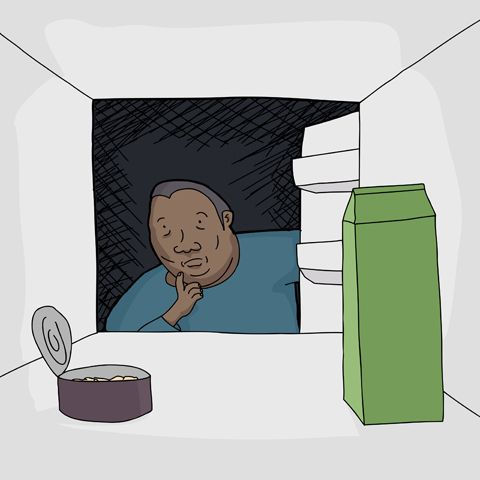
Man looks into a nearly empty refrigerator

Man with food insecurity looks into a nearly empty refrigerator.Marissa Rurka, a project manager on CHRT’s research and evaluation team, joined Phil Knight, executive director of the Food Bank Council of Michigan, and Gerry Brisson, president and CEO of  the Gleaners Community Food Bank, for a conversation about how Michigan physicians screen patients for food insecurity, and what happens next. The Food First Michigan podcast (episode 91) is available online.

During CHRT’s most recent statewide survey of Michigan Physicians, Rurka and other members of CHRT’s research and evaluation team learned that about half of Michigan physicians do not routinely screen patients for food insecurity, and about 40 percent don’t know where to refer patients to meet their food needs. Their findings are published in Physicians screen patients for social needs: what happens next? Survey, analysis, and policy recommendations.

“I think traditionally, there’s this tendency to think about how we can intervene at the physician level,” Rurka told Food First listeners. “What trainings can we bring to physicians? How do we convince physicians to screen more patients?

But there’s this whole other component of that gap, which is, do community-based organizations like food banks have the resources not only to support the patients that are being referred to them, but also to provide closed loop referrals to the health exchange platforms.”

“If we want people to use food—which is fairly inexpensive and very accessible—to help manage their chronic conditions, we’ve got to connect the screening and the referral and the fulfillment of that referral wherever that person goes to get food,” said Brisson, who says that California, Massachusetts, North Carolina, and Oregon have all developed closed loop systems to report back to physicians and health care professionals on the status of referrals.

In Michigan, Brisson and Knight explained, they are expanding an existing 1-800 helpline for physicians to call when they encounter patients with food insecurity.

“So when you talk about 40 percent of the physicians don’t know where to refer someone for food, they’re going to have that 1-800 number. They’re going to come to us. We’re going to find out where they live and what programs they qualify for. And then if they live in one of the five counties that Gleaners serves, we’ll contact Gleaners, they’ll put the box together, and in our perfect scenario, DoorDash will come and pick that box up and deliver it to the patient’s home.”

Rurka, who points out that physicians want to help patients in this way, but have a lot of time pressures, said the 1-800 line sounds like a good solution. The easier you can make it for physicians and health care teams, she said, the better it will be.