
Michigan Health Policy Resources
Legislative Brief: Michigan’s Health Insurance Marketplace at an Affordability Crossroads
Michigan’s Health Insurance Marketplace is a critical bridge for residents who do not have Medicaid or affordable employer coverage. With enhanced subsidies now expired, consumers may face higher out-of-pocket premiums, reduced coverage, and greater financial exposure. Impact: Enhanced federal subsidies for ACA Health Insurance Marketplace coverage ended this year. Michiganders are feeling the impact of this change – which is …
Read more >
HR1 and Michigan Medicaid: Eligibility and Financing Impacts
The One Big Beautiful Bill Act, known as HR1, was signed into law in 2025 and represents the largest federal cuts to the Medicaid program’s history. This sweeping legislation fundamentally reshapes how Michigan’s Medicaid program is funded, who can access its services, and how health care providers are compensated. By restructuring the program along the dimensions of eligibility and financing, …
Read more >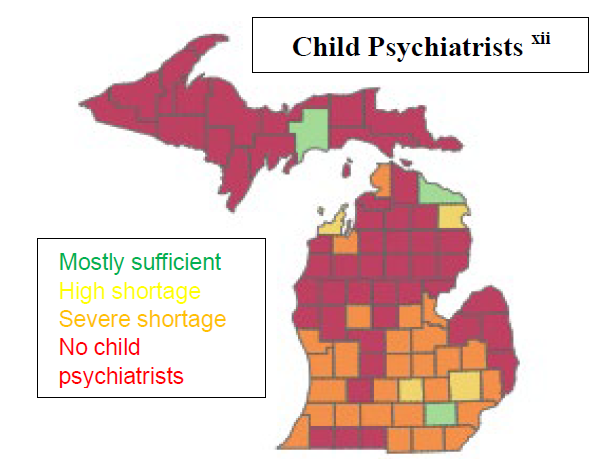
The Behavioral Health Landscape in Michigan
Michigan is facing a severe access crisis for mental health and substance use disorder (SUD) services, a situation worsened by the COVID-19 pandemic. 2019 data indicates that nearly half of Michigan adults with mental illness and 73% of those with SUD do not receive treatment. A critical takeaway from the brief is that insurance coverage does not guarantee access to …
Read more >
Health Insurance in Michigan, 2008 – 2024
Introduction Over the past 16 years, Michigan’s health insurance environment has undergone a significant transformation driven by major policy shifts and demographic changes. This report examines the period from 2008 to 2024, highlighting the impact of the Affordable Care Act (ACA), the launch of the Healthy Michigan Plan, and the response to the COVID-19 pandemic. By analyzing data from the …
Read more >
Pharmacy Benefit Managers (PBMs): A brief for legislators
Pharmacy Benefit Managers (PBMs) are powerful intermediaries between drug manufacturers, pharmacies, insurers, and patients. They negotiate rebates and manage prescription benefits for nearly all Americans with drug coverage. While PBMs were created to streamline claims and control costs, concerns have grown about opaque pricing, market concentration, and their impact on patients and independent pharmacies. Key Findings 1. What PBMs do …
Read more >
The 340B drug pricing program in Michigan: A brief for legislators
The federal 340B Drug Pricing Program allows safety-net providers to buy outpatient drugs at reduced prices and reinvest the savings to serve low-income and uninsured patients. In Michigan, hospitals, clinics, and community health centers use these funds to sustain vital services—from behavioral health and maternity care to discounted prescriptions. While widely used, the program continues to draw debate around transparency, …
Read more >
Access to health care in Michigan: A brief for legislators
The Center for Health and Research Transformation (CHRT) has released an issue brief focused on access to health care. The brief, titled “Access to Health Care in Michigan,” describes barriers that affect health care access in the state. Health insurance coverage is a central element improving access to care, but insurance coverage alone is not sufficient to ensure access. This …
Read more >
Michigan Medicaid: A primer
Michigan’s Medicaid program provides health insurance coverage for many low-income children and adults. It is a powerful tool for improving the health of Michiganders. In June 2024, over 2.6 million of Michigan’s 10 million residents were enrolled in Medicaid: 1.7 million adults and 946,314 children. Most of Michigan’s Medicaid costs —over 65 percent in 2024—are paid for by the federal …
Read more >
Healthcare workforce shortages in Michigan: Recommendations for recruiting and retaining talent
Like the rest of the nation, Michigan is experiencing severe workforce shortages, exacerbated by the COVID-19 pandemic. One 2023 survey showed that 86 percent of physician practices in the state reported declines in staff since the COVID-19 pandemic and another showed 27,000 hospital job openings in early 2023 – a 13 percent vacancy rate. Nearly all health roles are expected …
Read more >
Supporting direct care workers in Michigan: Strategies from other states
Direct care workers (DCWs) provide long-term care services to vulnerable populations—largely older adults and people with disabilities—and often help keep people in their homes. Medicaid is the largest payer for long-term care services, many of which are provided by DCWs. According to the 2024 Michigan Healthcare Workforce Index, Michigan’s home health aides, personal care aides and nursing assistants have some …
Read more >